
Introduction
If you've been researching Java full stack development in India, you've probably noticed one thing—almost every company claims to build secure, scalable, and enterprise-ready applications. But when your business depends on software that must handle thousands of users, integrate with existing systems, and support future growth, choosing the right development partner becomes much more important than simply hiring Java developers.
Java has remained one of the most trusted technologies for enterprise software for nearly three decades, and for good reason. Its stability, security, and mature ecosystem make it a preferred choice for everything from banking platforms to SaaS products and large-scale business applications. If you're exploring enterprise-grade solutions, our Java Development Services can help you understand how the right technology stack supports long-term business growth. In this guide, you'll learn what Java full stack development includes, why businesses continue to invest in Java, and how experienced partners like BrillianTech help organizations build secure, scalable, and future-ready applications.
Key Takeaways
• Java full stack development combines frontend technologies, Java-based backend frameworks, databases, and APIs to build complete web applications.
• Java remains one of the most trusted enterprise programming languages because of its security, scalability, platform independence, and long-term reliability.
• Modern Java full stack applications commonly use Spring Boot, React or Angular, REST APIs, cloud platforms, and SQL or NoSQL databases.
• Choosing an experienced Java development company improves software quality, project delivery, maintainability, and long-term business value.
• Java full stack solutions are widely used across banking, healthcare, retail, manufacturing, logistics, education, government, and SaaS industries.
• BrillianTech delivers end-to-end Java full stack development services using agile methodologies, cloud-native architectures, and enterprise-grade engineering practices.
What Is Java Full Stack Development?
Java full stack development is the practice of building complete web applications using Java-based backend technologies, frontend frameworks, databases, and APIs within a unified development approach. Instead of hiring separate teams for the user interface, backend services, and database management, businesses can rely on a full stack development team that manages the entire application lifecycle—from planning and design to deployment and long-term maintenance.
At its core, Java acts as the backend engine that powers business logic, data processing, authentication, and integrations. On the frontend, technologies like React, Angular, or Vue.js create responsive interfaces that users interact with every day. Together, these technologies allow businesses to build fast, secure, and scalable applications that deliver a seamless user experience. Businesses looking for tailored enterprise solutions often combine Java full stack expertise with our Custom Software Development Services to build applications that align with their unique operational requirements and long-term growth strategies.
Even after nearly three decades, Java continues to be one of the world's most widely used enterprise programming languages. According to the Stack Overflow Developer Survey 2025, Java remains among the most commonly used programming languages for professional software development, while the Oracle Java Platform continues to receive Long-Term Support (LTS) releases that help organizations maintain secure and stable enterprise applications.
What Does a Java Full Stack Include?
A Java full stack combines multiple technologies that work together to deliver a complete web application. Each layer has a specific role, ensuring the application is fast, secure, and easy to maintain.
A typical Java full stack includes:
Frontend
• React
• Angular
• Vue.js
• HTML5
• CSS3
• JavaScript
Backend
• Java
• Spring Boot
• Spring MVC
• Hibernate
• REST APIs
Database
• MySQL
• PostgreSQL
• MongoDB
Cloud & DevOps
• AWS
• Microsoft Azure
• Google Cloud
• Docker
• Kubernetes
This combination enables developers to build everything from customer portals and SaaS platforms to enterprise resource planning (ERP) systems and business automation tools.
What Types of Applications Can Be Built with Java Full Stack Development?
One of Java's biggest strengths is its versatility. It supports applications of almost every size—from startup MVPs to mission-critical enterprise systems used by millions of users.
Businesses commonly use Java full stack development for:
• Enterprise Resource Planning (ERP) systems
• Customer Relationship Management (CRM) platforms
• Banking and financial applications
• Healthcare management systems
• E-commerce platforms
• Inventory and warehouse management software
• Learning Management Systems (LMS)
• SaaS products
• HR and payroll systems
• Government and public sector portals
For example, an online retailer may use Java to process thousands of orders every day, while a hospital might rely on a Java-based system to securely manage patient records, appointments, and billing.
Why Is Java Full Stack Development Still Relevant for Modern Businesses?
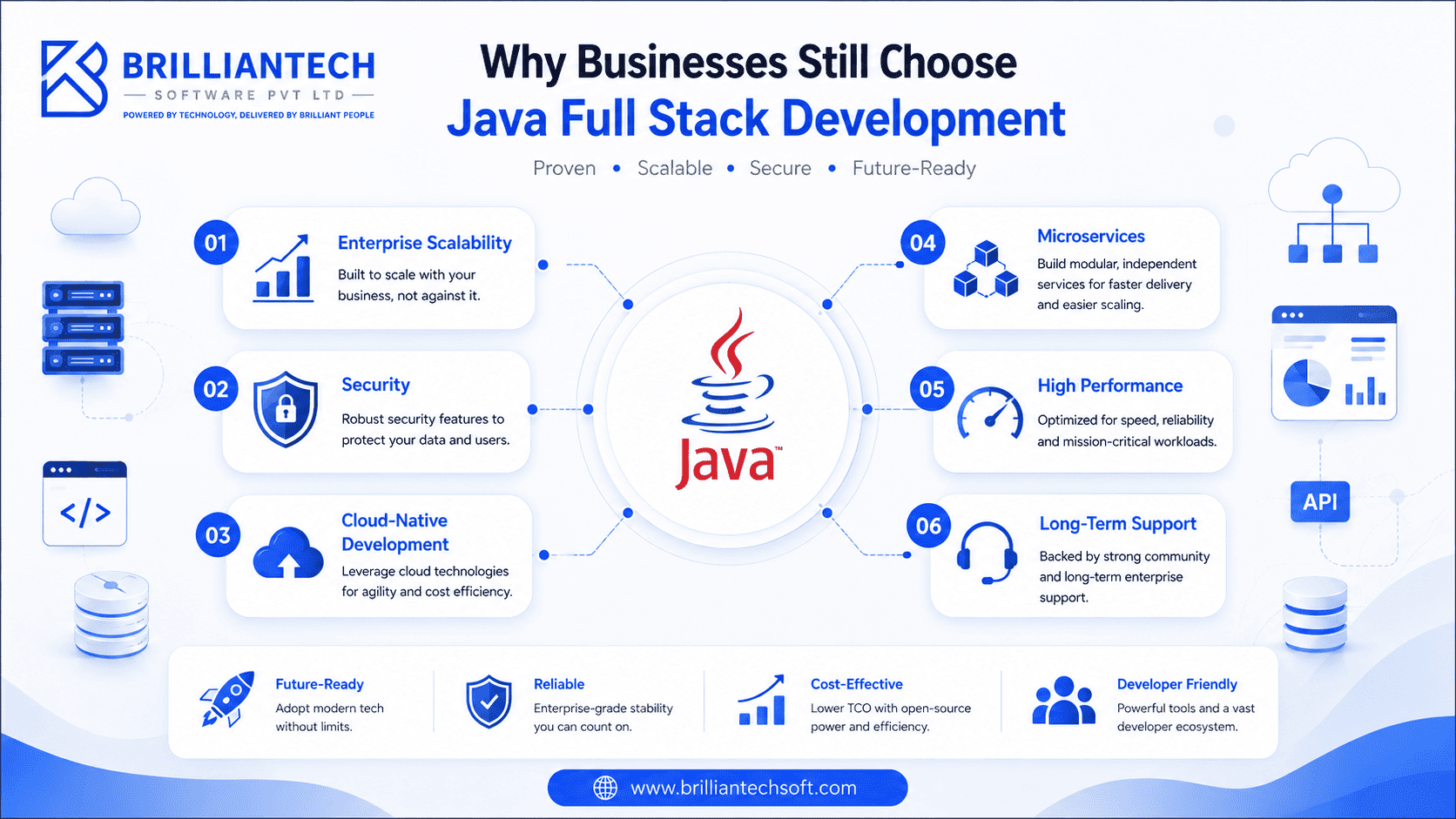
Java full stack development remains highly relevant because it provides the scalability, security, and long-term reliability required for modern business applications. While new programming languages and frameworks continue to emerge, Java has consistently evolved to support cloud-native architectures, microservices, containerization, and enterprise application development.
Today's organizations aren't simply building websites—they're developing digital products that manage customer interactions, automate operations, integrate with multiple systems, and process large volumes of business data. Java provides the stability needed to support these complex workloads without sacrificing performance.
Oracle continues to invest heavily in Java through regular feature updates and Long-Term Support (LTS) releases, ensuring organizations can modernize applications while maintaining compatibility with existing systems. This commitment has helped Java remain one of the preferred technologies for enterprise software development across industries.
Enterprise Scalability
As businesses grow, their software must support more users, larger datasets, and increasingly complex workflows. Java is designed to handle these demands efficiently.
Whether you're expanding into new markets or adding new digital services, Java's mature ecosystem allows applications to scale without requiring a complete technology overhaul.
Security by Design
Security is one of the main reasons organizations continue to choose Java for enterprise development.
Java supports secure authentication, encryption, role-based access control, and robust exception handling. Frameworks like Spring Security help developers implement modern security practices while following industry standards such as the OWASP Application Security Verification Standard (ASVS).
For businesses handling financial transactions, healthcare records, or confidential customer information, these security capabilities are essential.
Cloud-Ready and Microservices-Friendly
Modern software is increasingly built using microservices and cloud-native architectures rather than traditional monolithic systems.
Java frameworks such as Spring Boot make it easier to develop independent services that can be deployed, updated, and scaled individually. Combined with platforms like AWS, Microsoft Azure, and Google Cloud, businesses can create highly available applications that adapt to changing workloads without significant infrastructure changes.
This flexibility is particularly valuable for organizations planning long-term digital transformation initiatives.
Which Technologies Are Included in a Java Full Stack?
A Java full stack combines Java-based backend technologies, modern frontend frameworks, databases, APIs, and cloud infrastructure to build complete, scalable web applications. Each technology plays a specific role, from creating intuitive user interfaces to processing business logic and managing data securely.
Unlike traditional development approaches that rely on separate technology stacks, a modern Java full stack provides a unified ecosystem for developing enterprise applications. This approach simplifies development, improves collaboration between teams, and makes applications easier to maintain as business requirements evolve. According to Oracle, Spring Boot helps developers build production-ready Java applications with minimal configuration, making it one of the most widely adopted frameworks for enterprise Java development.
Backend Technologies: The Foundation of Enterprise Applications
The backend is the engine that powers every Java full stack application. It handles business logic, user authentication, database operations, integrations, and communication between different software systems.
A typical Java backend includes several proven technologies:
Java
Java remains one of the most trusted programming languages for enterprise software because of its platform independence, reliability, performance, and strong security model. Its "write once, run anywhere" philosophy allows applications to run across multiple operating systems without major modifications.
Businesses often choose Java for applications that require:
• High availability
• Large transaction volumes
• Long-term maintainability
• Enterprise-grade security
• Cloud deployment
Spring Boot
Spring Boot simplifies enterprise Java development by providing pre-configured components, embedded servers, and production-ready features that reduce development time. Instead of spending weeks configuring infrastructure, development teams can focus on building business functionality. - Oracle
Spring Boot is commonly used for:
• REST API development
• Microservices
• Authentication systems
• Cloud-native applications
• Enterprise SaaS platforms
Spring MVC
Spring MVC manages the interaction between users, business logic, and application data.
It helps developers:
• Handle HTTP requests
• Build secure web applications
• Separate frontend and backend responsibilities
• Improve application maintainability
This architectural pattern makes enterprise applications easier to scale as new features are introduced.
Hibernate
Hibernate is an Object-Relational Mapping (ORM) framework that simplifies database interactions by mapping Java objects to relational database tables. This reduces repetitive SQL code while improving developer productivity. Hibernate is commonly used as the default JPA provider in Spring Boot applications. - Stack Overflow
REST APIs
REST APIs enable different applications, mobile apps, and third-party services to communicate securely.
For example:
• Payment gateway integrations
• ERP connectivity
• CRM synchronization
• Mobile application support
• Third-party SaaS integrations
Frontend Technologies That Deliver Modern User Experiences
Frontend technologies determine how users interact with your application. A responsive, intuitive interface improves customer satisfaction while increasing productivity for internal business users.
Modern Java applications commonly use JavaScript frameworks instead of traditional server-rendered interfaces.
React
React is ideal for highly interactive applications that require reusable UI components and fast rendering.
Businesses often choose React for:
• SaaS platforms
• Customer portals
• Admin dashboards
• Enterprise CRM systems
According to the Stack Overflow Developer Survey, React continues to be one of the most widely used web technologies among professional developers.
Angular
Angular provides a structured framework for building large enterprise applications with strong architecture and built-in features.
It's commonly used for:
• Banking platforms
• Insurance systems
• Government portals
• Enterprise workflow applications
Vue.js
Vue.js offers a lightweight alternative for organizations seeking faster development with a simpler learning curve.
It works well for:
• Startup MVPs
• Internal business applications
• Customer dashboards
• Progressive web applications
HTML5, CSS3 & JavaScript
These core web technologies remain essential for every Java full stack project.
Together they provide:
• Responsive layouts
• Interactive interfaces
• Cross-browser compatibility
• Accessible user experiences
Databases That Power Business Applications
Databases store, organize, and retrieve business information efficiently. Selecting the right database depends on the application's performance, scalability, and reporting requirements.
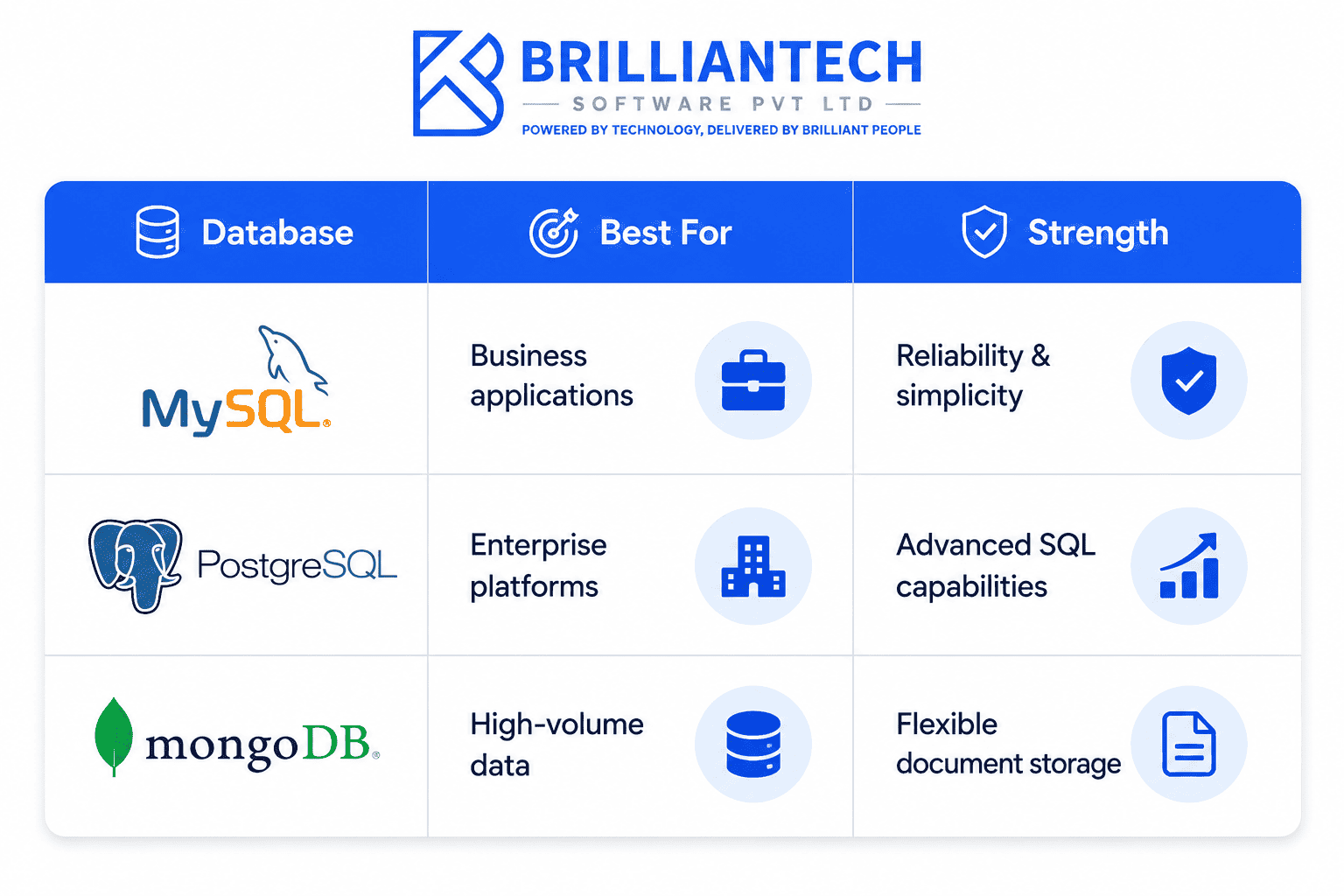
Many enterprise applications also combine SQL and NoSQL databases to balance transactional accuracy with scalability.
Cloud, DevOps, and Deployment Technologies
Modern Java applications are increasingly deployed using cloud-native infrastructure. This approach improves scalability, reduces infrastructure costs, and simplifies software updates.
Common technologies include:
Cloud Platforms
• Amazon Web Services (AWS)
• Microsoft Azure
• Google Cloud Platform
DevOps Tools
• Docker
• Kubernetes
• Jenkins
• GitHub Actions
• Maven
• Gradle
These technologies enable automated deployments, continuous integration, and rapid scaling while reducing downtime.
As your application grows, adopting Cloud Application Development services helps you leverage scalable cloud infrastructure, automated deployments, and modern DevOps practices that improve performance, security, and long-term operational efficiency.
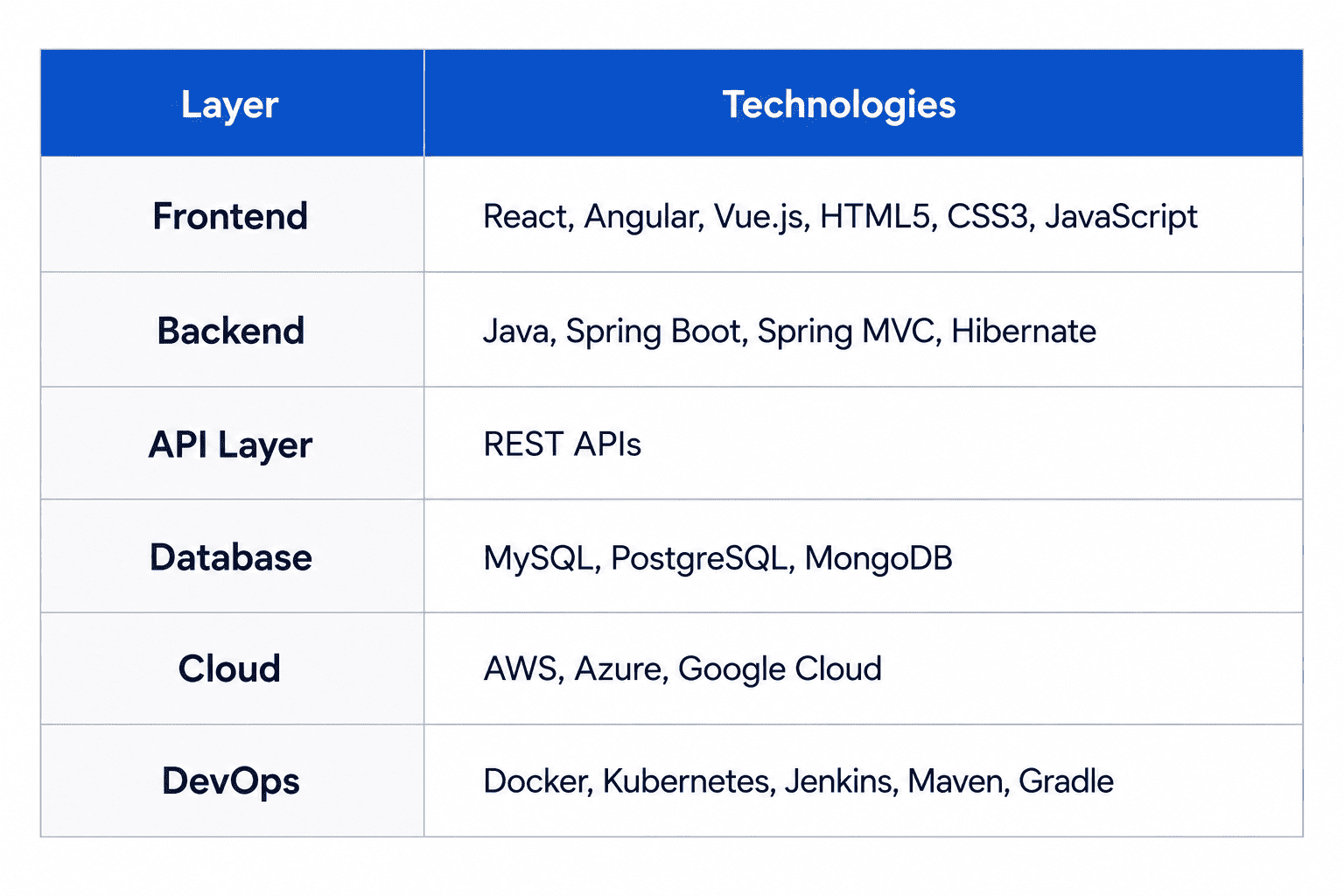
Technology Stack Overview
What Are the Business Benefits of Java Full Stack Development?
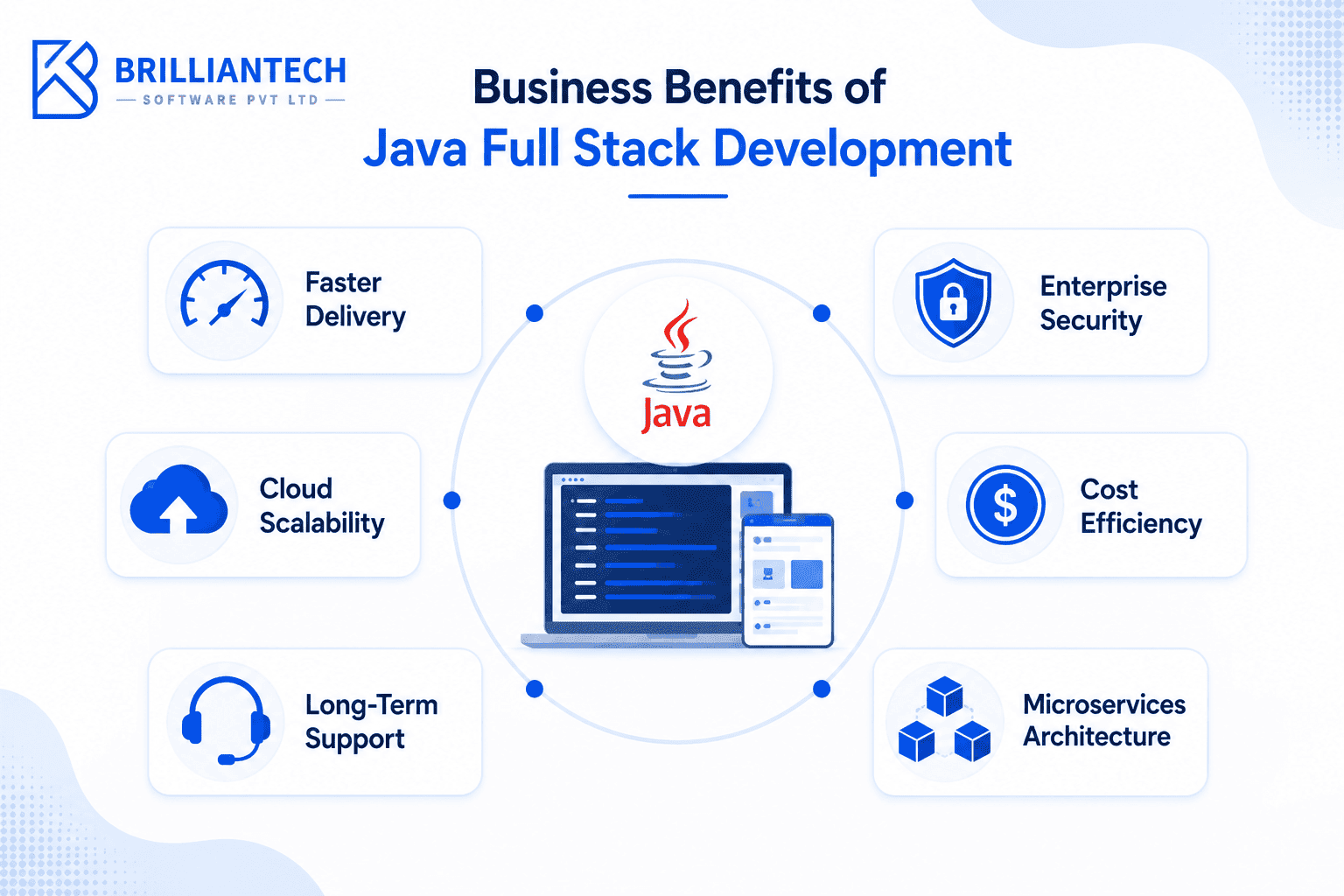
Java full stack development helps businesses build secure, scalable, and high-performance applications while simplifying development and reducing long-term operational costs. Instead of managing multiple disconnected technologies, organizations benefit from an integrated ecosystem that supports faster delivery and easier maintenance.
Whether you're building an enterprise platform, a SaaS product, or modernizing a legacy application, Java full stack development provides the flexibility needed to support long-term business growth.
End-to-End Development Accelerates Delivery
Working with a Java full stack team means frontend, backend, database, and API development are managed together.
This integrated approach helps businesses:
• Reduce communication gaps
• Speed up development cycles
• Simplify project management
• Deliver features more efficiently
For startups, this often translates into faster MVP launches. For enterprises, it enables quicker modernization of existing systems.
Enterprise-Grade Security Protects Critical Business Data
Java has earned its reputation in enterprise software because security is built into its ecosystem.
Frameworks such as Spring Security support:
• Role-based access control
• OAuth authentication
• JWT authorization
• Secure API communication
• Data encryption
Combined with secure coding practices and OWASP recommendations, Java applications help organizations reduce security risks while maintaining regulatory compliance. - Spring Framework Overview
Scalability Supports Business Growth
Business applications rarely remain the same after launch. As customer demand increases, software must handle additional users, larger databases, and more complex workflows.
Java's architecture supports:
• Horizontal scaling
• Microservices
• Distributed systems
• Cloud-native deployments
• High transaction processing
This flexibility allows businesses to expand without rebuilding their applications from scratch.
Long-Term Maintainability Reduces Technical Debt
One of Java's greatest strengths is its mature ecosystem.
Large developer communities, long-term support releases, and extensive documentation make Java applications easier to maintain for years after deployment. This reduces technical debt and lowers the total cost of ownership over the application's lifecycle.
How Does the Java Full Stack Development Process Work?
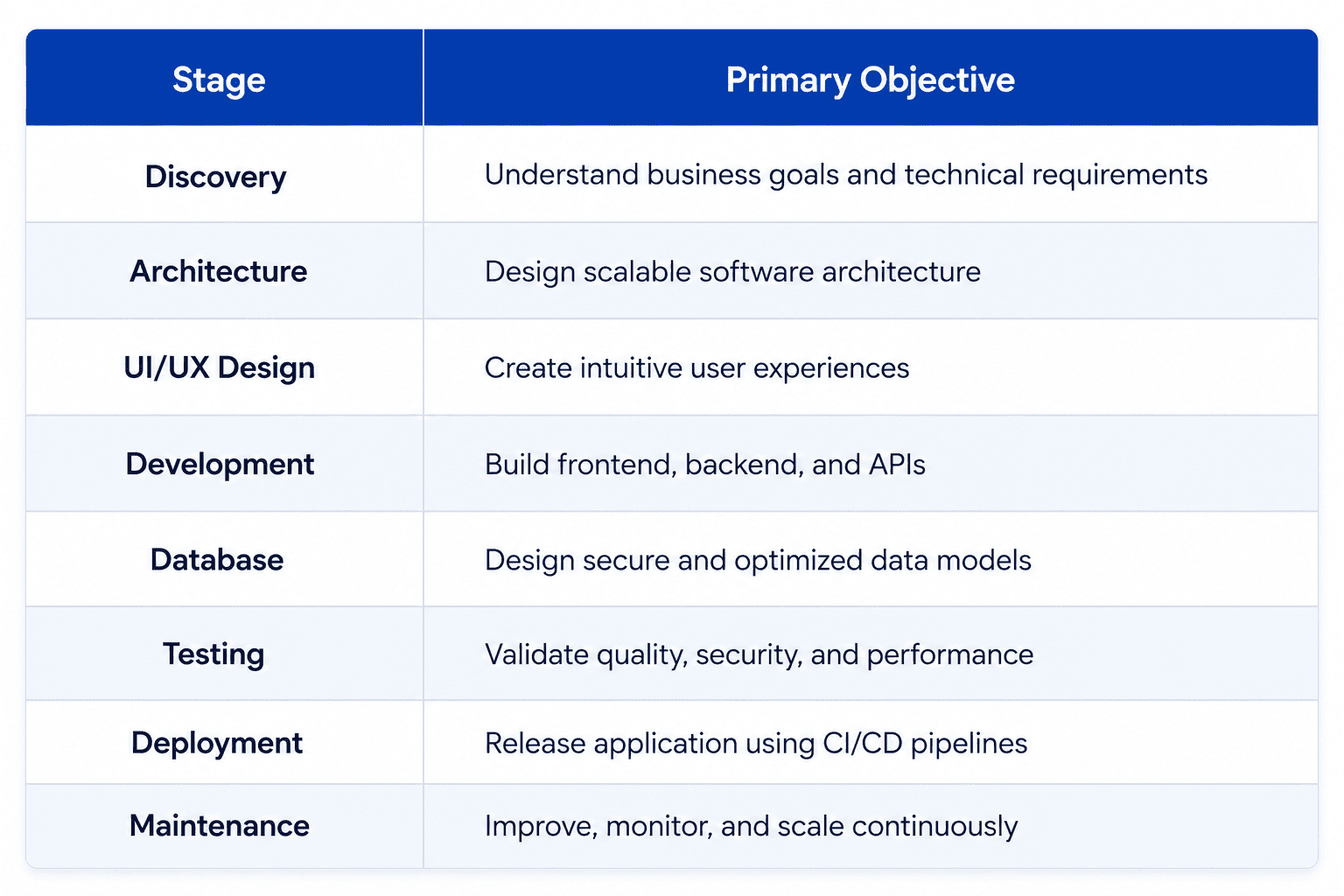
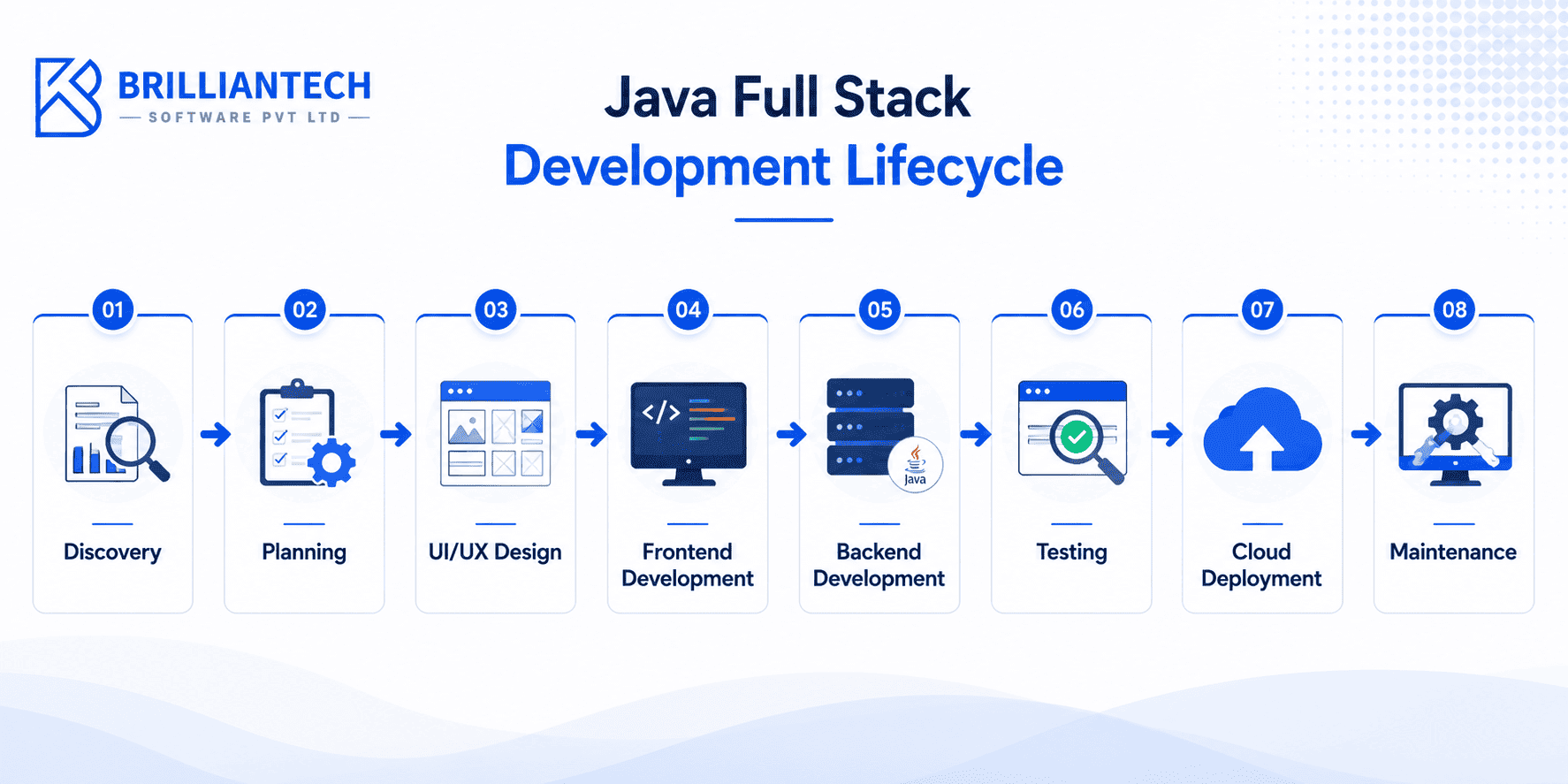
The Java full stack development process is a structured approach that transforms a business idea into a secure, scalable, and production-ready application. It combines business analysis, UI/UX design, backend development, frontend development, testing, deployment, and continuous maintenance to ensure the application delivers long-term value.
Following a well-defined development lifecycle helps reduce project risks, improves collaboration between stakeholders, and ensures every feature aligns with business goals. Modern frameworks such as Spring Boot further streamline this process by reducing configuration overhead and accelerating application development.
Step 1: Discovery and Requirement Gathering
Every successful software project begins with understanding the business—not writing code.
During the discovery phase, developers, architects, and stakeholders work together to identify:
• Business objectives
• User personas
• Functional requirements
• Technical constraints
• Integration needs
• Compliance requirements
• Success metrics
For example, a financial services company modernizing its online banking platform would identify capabilities such as account management, online payments, fraud detection, and transaction reporting during discovery. AWS highlights financial services organizations as examples where defining business domains and critical application capabilities early helps prioritize development and ensures that high-value business functions are supported throughout the project. - AWS
Spending time on discovery minimizes costly changes later in the project and creates a clear roadmap for development.
Step 2: Architecture Planning and UI/UX Design
Application architecture determines how well software performs, scales, and adapts to future business needs.
After gathering requirements, solution architects decide whether the application should follow a monolithic or microservices architecture. They also define:
• Database structure
• API strategy
• Authentication model
• Cloud infrastructure
• Third-party integrations
At the same time, UI/UX designers create wireframes, prototypes, and user journeys to ensure the application is intuitive and easy to navigate.
A thoughtfully designed architecture reduces technical debt and makes future enhancements much easier.
Step 3: Frontend and Backend Development
Once the architecture is finalized, development begins simultaneously on both the frontend and backend.
The frontend team builds responsive user interfaces using technologies such as:
• React
• Angular
• Vue.js
• HTML5
• CSS3
• JavaScript
Meanwhile, the backend team develops business logic using:
• Java
• Spring Boot
• Spring MVC
• Hibernate
• REST APIs
Spring Boot simplifies enterprise application development by providing production-ready configurations, embedded servers, dependency management, and monitoring capabilities, allowing developers to focus more on solving business problems than infrastructure setup.
Explore our Web Application Development Services to learn how we design, develop, and deploy secure, scalable web applications tailored to your business objectives.
Step 4: API Integration and Database Development
APIs connect your application with internal systems, external platforms, and third-party services.
Most enterprise applications integrate with multiple services, including:
• Payment gateways
• ERP platforms
• CRM systems
• Email services
• SMS providers
• Analytics platforms
• Cloud storage
Developers also optimize the application's database structure to improve performance, maintain data integrity, and support future scalability.
A well-designed API architecture ensures different systems communicate efficiently without compromising security or performance.
Step 5: Testing and Quality Assurance
Testing ensures the application performs reliably before it reaches production.
Quality assurance teams validate:
• Functionality
• Performance
• Security
• Compatibility
• Database operations
• API responses
• User experience
Modern Java projects typically combine:
• Unit testing
• Integration testing
• Regression testing
• Security testing
• Performance testing
• User Acceptance Testing (UAT)
This process helps identify issues early, reducing production defects and improving software reliability.
Discover how our Quality Assurance Testing Services help ensure your Java application is secure, reliable, and thoroughly tested before deployment, delivering a seamless experience for your users.
Step 6: Deployment and Cloud Release
After successful testing, the application is deployed to a production environment.
Modern Java applications commonly use:
• Docker containers
• Kubernetes orchestration
• CI/CD pipelines
• Jenkins automation
• GitHub Actions
• Cloud infrastructure
Containerization ensures consistent deployments across development, testing, and production environments, while Kubernetes automates scaling, deployment, and service management. According to the Spring ecosystem's 2024 survey, 65% of respondents use Kubernetes in their Spring environments, highlighting its widespread adoption for enterprise Java applications.
Step 7: Continuous Maintenance and Optimization
Launching an application is the beginning of its lifecycle—not the end.
Post-launch activities include:
• Security updates
• Performance monitoring
• Bug fixes
• Feature enhancements
• Infrastructure optimization
• Database tuning
• Cloud cost optimization
Regular maintenance helps applications remain secure, compatible, and aligned with evolving business needs.
Java Full Stack Development Lifecycle
Which Development Tools Are Commonly Used in Java Full Stack Projects?
Java full stack development relies on a combination of IDEs, build tools, testing platforms, version control systems, and cloud technologies to streamline development and improve software quality. These tools enable teams to collaborate efficiently, automate repetitive tasks, and accelerate application delivery.
Choosing the right toolset is just as important as selecting the right technology stack because it directly impacts productivity, maintainability, and deployment speed.
Essential Development Tools
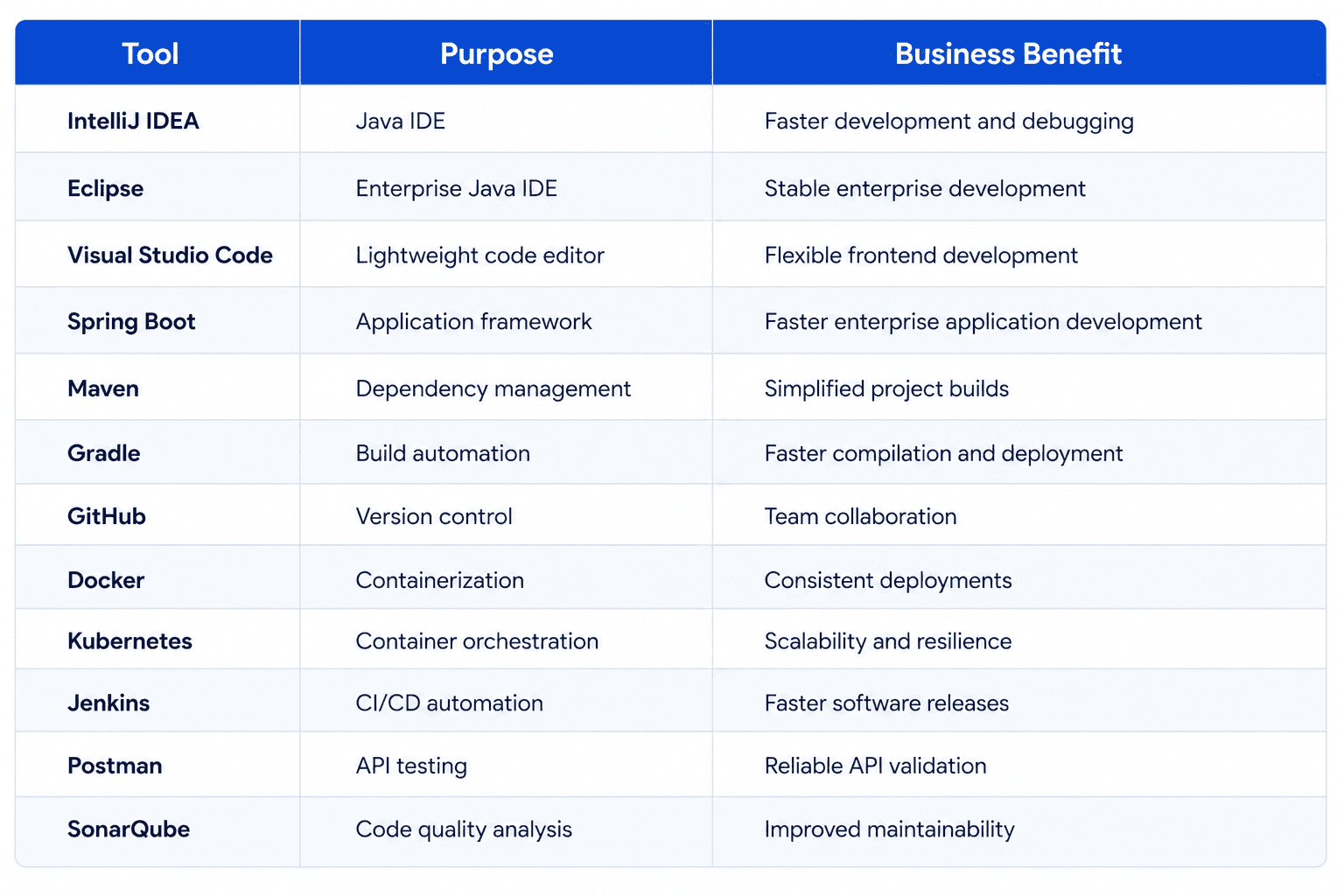
Spring Boot officially supports Maven and Gradle as its primary build tools, enabling standardized dependency management and automated application packaging for enterprise projects.
Practical Business Applications of Java Full Stack Development
Java full stack development powers many of the business applications organizations rely on every day.
Common examples include:
• Enterprise ERP systems
• Banking and payment platforms
• Healthcare management software
• Customer Relationship Management (CRM) solutions
• Inventory management systems
• E-commerce marketplaces
• Learning Management Systems (LMS)
• SaaS products
• HR and payroll software
• Government digital services
For instance, a manufacturing company can use a Java-based ERP system to monitor inventory, automate procurement, manage suppliers, and generate real-time business reports from a single platform.
Why Do Enterprises Continue to Choose Java for Large-Scale Applications?
Java remains one of the most trusted technologies for enterprise software because it combines reliability, scalability, security, and a mature ecosystem that supports long-term business growth. While many programming languages have emerged over the years, Java continues to power mission-critical applications across industries, from banking and healthcare to retail, logistics, and SaaS.
Enterprise adoption also reflects Java's ability to evolve. Modern Java applications support cloud-native architectures, containerization, microservices, and AI-powered workloads while maintaining backward compatibility with existing systems. According to the 2025 Jakarta EE Developer Survey, Java 21 adoption has grown rapidly, and cloud-native modernization continues to be a major priority for enterprise development teams. - Eclipse Foundation
A Mature Ecosystem Reduces Business Risk
Choosing a technology isn't only about features—it's about long-term sustainability.
Java offers one of the largest enterprise ecosystems in software development, supported by thousands of libraries, frameworks, development tools, and an active global developer community. This maturity reduces vendor dependency and makes it easier for businesses to maintain and expand applications over time.
For organizations planning digital transformation initiatives that may span five to ten years, technology stability becomes a strategic advantage rather than just a technical consideration.
Proven Performance at Enterprise Scale
Many of the world's largest digital platforms rely on Java to process millions of transactions every day.
Some well-known examples include:
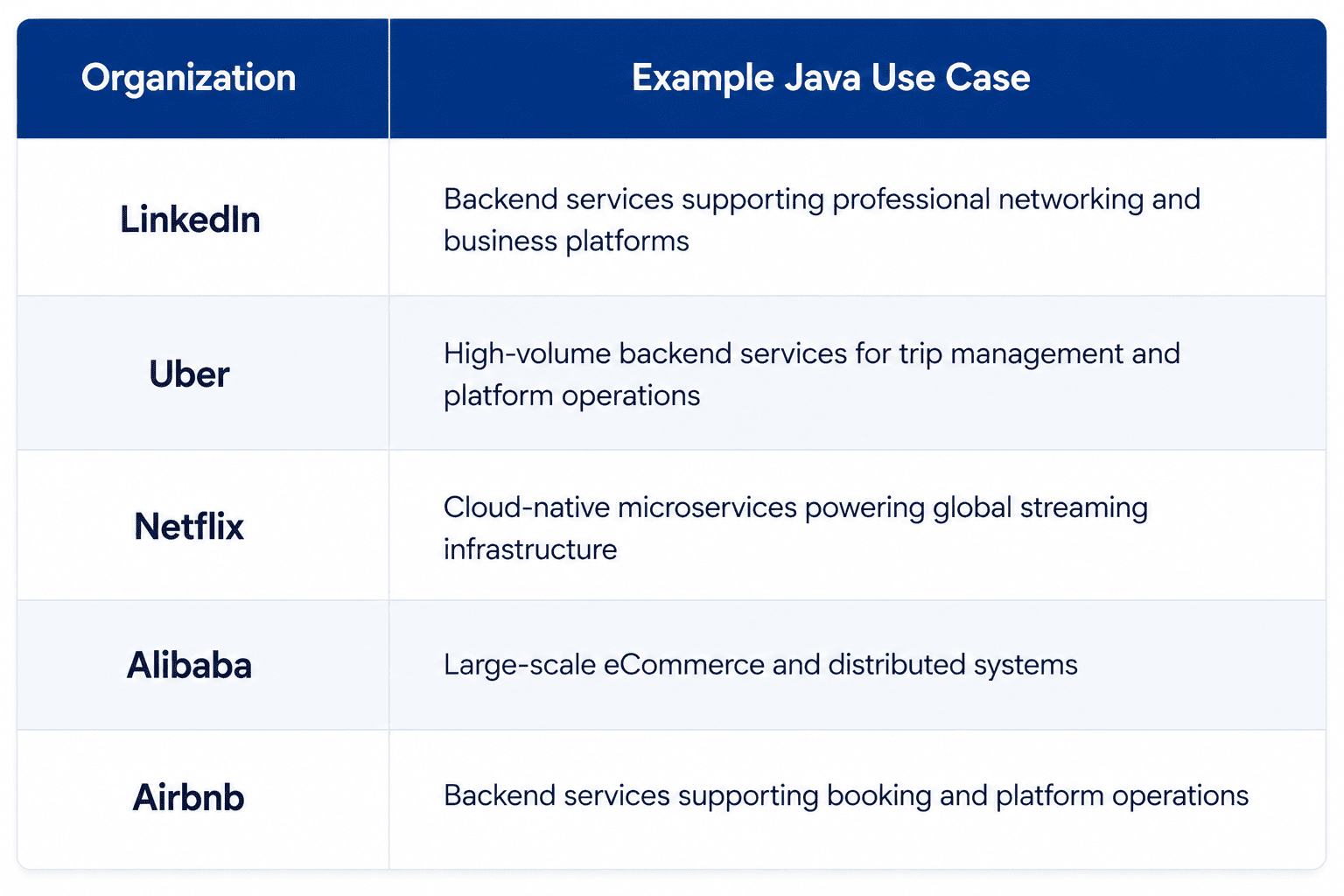
These organizations choose Java because it provides predictable performance, robust concurrency support, and long-term maintainability for complex distributed systems.
Continuous Innovation Keeps Java Future-Ready
A common misconception is that Java is a legacy technology.
In reality, Java continues to receive regular feature releases and Long-Term Support (LTS) versions that improve developer productivity, application performance, and security. Enterprise frameworks such as Spring Boot and Jakarta EE also continue evolving to support cloud-native development, containers, and Kubernetes deployments. -Eclipse news
Why Choose BrillianTech for Java Full Stack Development?
BrillianTech combines enterprise Java expertise, modern development practices, and business-focused engineering to deliver secure, scalable, and future-ready applications. Rather than simply writing code, our team works closely with clients to understand their objectives, design the right architecture, and build solutions that support long-term growth.
Whether you're launching a new SaaS platform, modernizing a legacy Java application, or building enterprise software from scratch, our focus remains the same—delivering software that creates measurable business value.
Experienced Java Full Stack Engineers
Our development team has experience working across every layer of the Java ecosystem.
Our expertise includes:
• Java
• Spring Boot
• Spring MVC
• Hibernate
• RESTful APIs
• React
• Angular
• Vue.js
• MySQL
• PostgreSQL
• MongoDB
This full-stack expertise enables faster collaboration, better architectural decisions, and more efficient project delivery.
Enterprise-First Development Approach
Enterprise applications demand more than functionality—they require security, scalability, and reliability.
BrillianTech follows industry-recognized development practices that emphasize:
• Secure coding standards
• Scalable software architecture
• Agile delivery
• Continuous testing
• Cloud-native deployment
• Performance optimization
This approach helps reduce technical debt while ensuring applications remain maintainable as business requirements evolve.
Flexible Engagement Models
Every organization has different resource requirements.
BrillianTech offers flexible engagement models, including:
• Dedicated Java development teams
• Project-based development
• Team augmentation
• Long-term technology partnerships
This flexibility allows startups, SMBs, and enterprises to scale development resources according to project needs.
If your project requires long-term collaboration or specialized technical expertise, you can choose our Dedicated Development Team Services for end-to-end development or leverage our Staff Augmentation Services to quickly extend your existing development team with experienced Java professionals.
How Much Does Java Full Stack Development Cost in India?
Java full stack development costs in India depend on the application's complexity, required features, integrations, development timeline, and team size. While every project is unique, understanding typical investment ranges helps businesses plan more effectively.
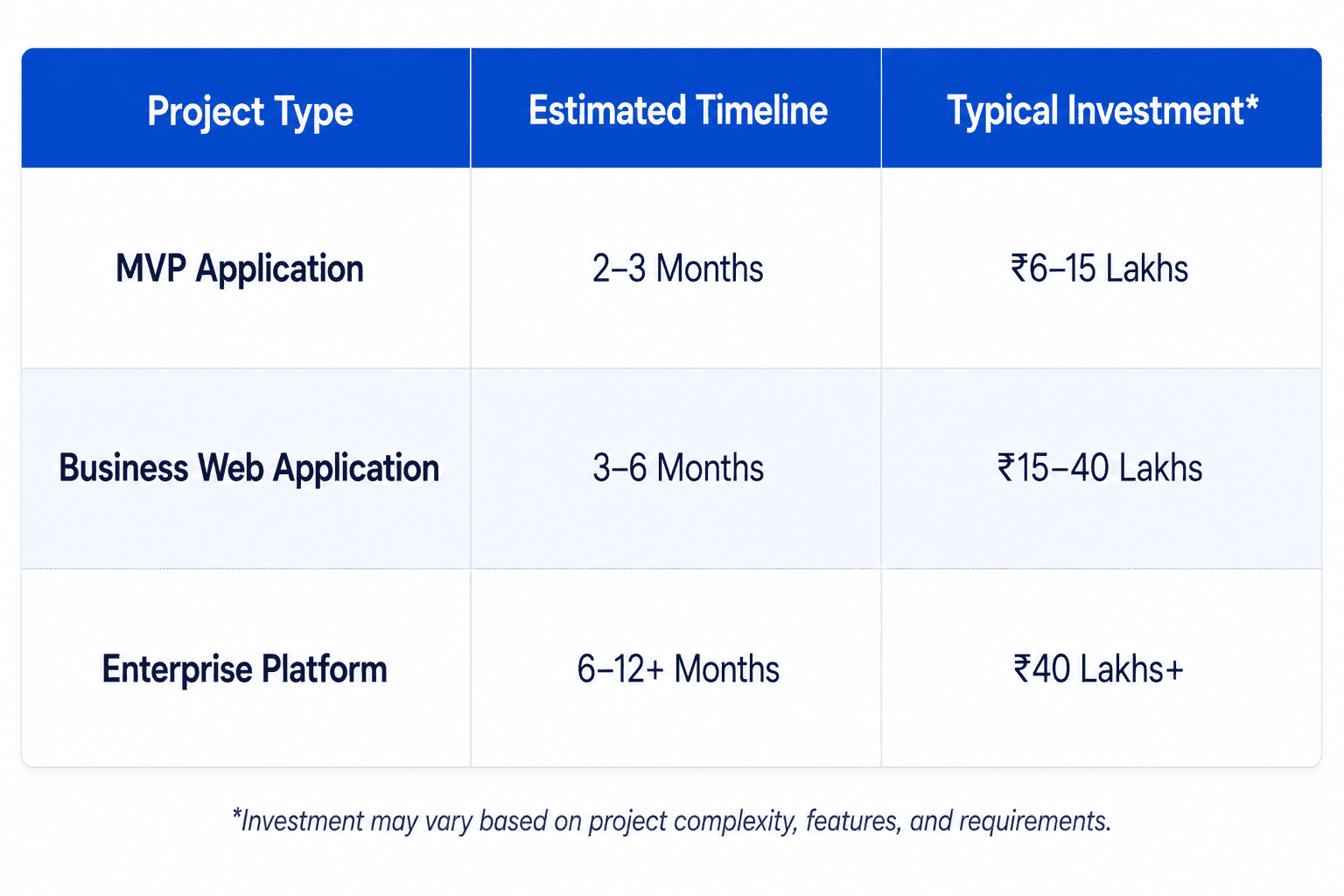
Actual costs vary based on functionality, cloud infrastructure, compliance requirements, third-party integrations, and ongoing maintenance.
Key factors influencing project cost include:
• UI/UX complexity
• Number of modules
• API integrations
• Security requirements
• Cloud infrastructure
• Testing scope
• Post-launch support
Focusing solely on the lowest development cost can increase long-term maintenance expenses. Selecting an experienced technology partner often reduces project risks and improves return on investment.
How Long Does It Take to Build a Java Full Stack Application?
Most Java full stack applications take between two and twelve months to develop, depending on project complexity and business requirements.
A typical development timeline looks like this:
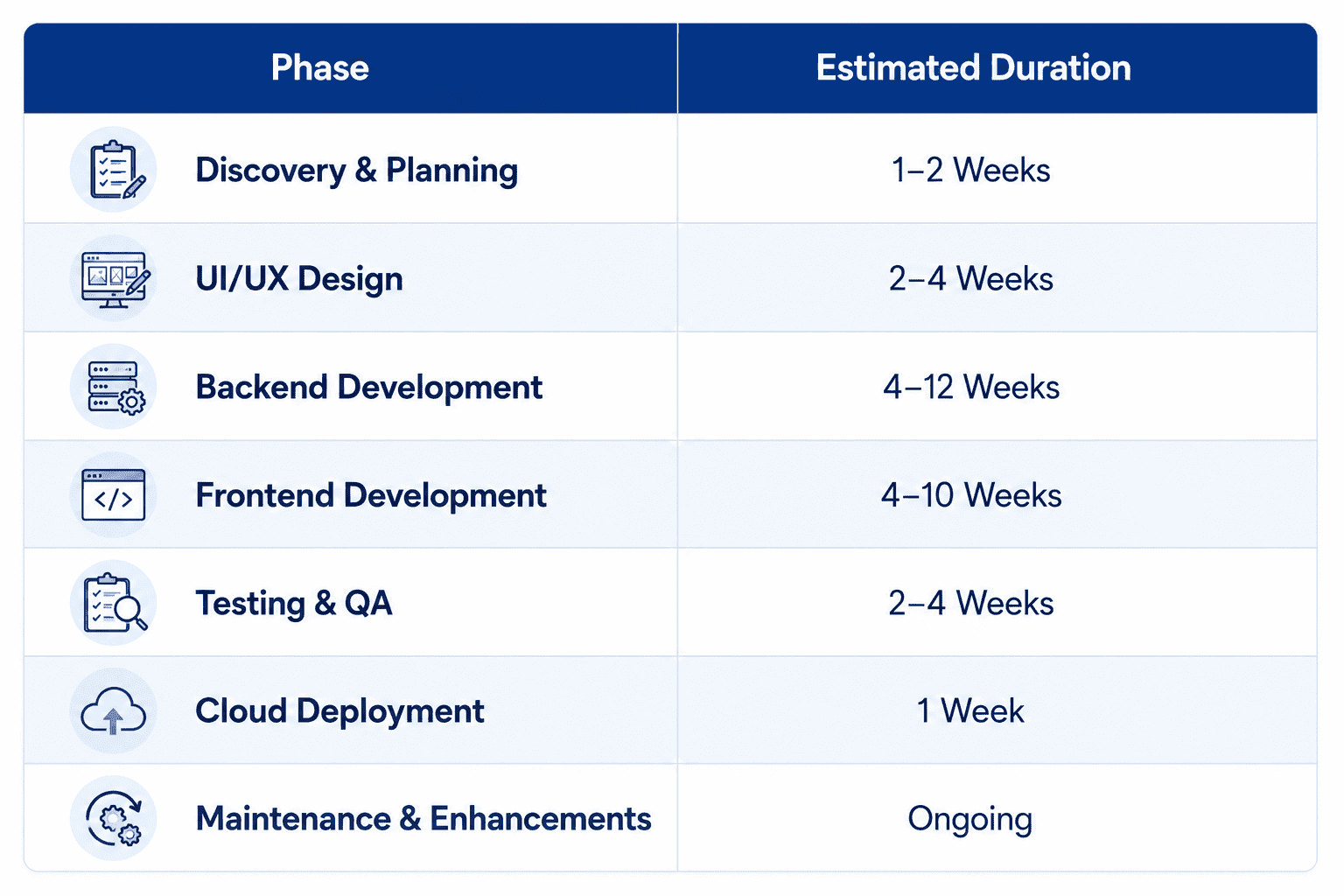
Using Agile methodologies allows businesses to review progress continuously, prioritize features, and launch functional releases earlier instead of waiting for a complete product.
What Happens After Deployment and Maintenance?
Application deployment marks the beginning of continuous improvement rather than the end of software development. Successful applications evolve through regular updates, performance optimization, and proactive monitoring.
After deployment, development teams typically focus on:
• Security updates
• Performance optimization
• Infrastructure monitoring
• Feature enhancements
• Cloud cost optimization
• Database tuning
• Bug fixes
• Version upgrades
For example, an eCommerce platform may introduce AI-powered product recommendations after launch, while a healthcare application might integrate telemedicine features as business requirements change.
Long-term maintenance ensures applications remain secure, compatible, and aligned with changing customer expectations.
What's Next? A Roadmap for Your Java Full Stack Project
A successful Java full stack project starts with clear business objectives and a structured implementation plan. Before selecting a development partner, evaluate both your technical requirements and long-term business goals.
Use this checklist to prepare your project:
• Define business objectives and success metrics.
• Identify your target users and core features.
• Choose the right application architecture.
• Select a suitable frontend framework.
• Finalize database and integration requirements.
• Plan cloud infrastructure and deployment.
• Shortlist experienced Java development companies.
• Build and validate an MVP.
• Scale your application using cloud-native technologies.
Following a structured roadmap reduces project uncertainty and creates a stronger foundation for long-term success.
Conclusion
Java full stack development remains one of the most reliable approaches for building secure, scalable, and enterprise-grade web applications. By combining Java with modern frontend frameworks, cloud infrastructure, APIs, and DevOps practices, businesses can create applications that support digital transformation today while remaining adaptable for future growth.
Choosing the right technology partner is just as important as selecting the right technology stack. A company with proven expertise in enterprise architecture, agile delivery, security, and post-launch support can significantly improve project outcomes and reduce long-term development risks.
At BrillianTech, we help startups, growing businesses, and enterprises transform ideas into high-performance Java applications using modern development frameworks, cloud-native architectures, and industry best practices. If you're ready to build a secure and scalable enterprise application, connect with our Contact BrillianTech Java Experts to discuss your project requirements and discover the right development approach for your business.