
Introduction
If you're searching for the top web app development company in India, you've probably already compared multiple agencies, explored technology stacks, and reviewed countless portfolios. Yet, finding a development partner that can deliver long-term business value—not just functional code—can still be challenging.
Choosing a web app development company is a strategic business decision that influences your application's scalability, security, performance, and future growth. In this guide, you'll learn how to evaluate web application development companies, understand why India has become a global software development hub, and discover the factors that separate leading development partners like BrillianTech from the rest.
Key Takeaways
• Web application development companies build browser-based software that helps businesses automate operations, improve customer experiences, and deliver digital services.
• Choosing the right development partner requires evaluating technical expertise, industry experience, communication, security practices, and long-term support.
• India is one of the world's leading destinations for web application development because of its experienced software engineers, competitive pricing, and mature technology ecosystem.
• Modern web applications rely on scalable frontend frameworks, cloud infrastructure, APIs, and DevOps practices to support business growth.
• Following a structured vendor evaluation process reduces project risks, improves software quality, and increases long-term return on investment.
• BrillianTech delivers end-to-end web application development services using agile methodologies, cloud-native architectures, and modern technology stacks.
What Is a Web App Development Company?
A web app development company designs, develops, deploys, and maintains browser-based software that enables businesses to automate processes, deliver digital services, and improve customer experiences. Unlike traditional websites that primarily display information, web applications allow users to interact with data, perform transactions, collaborate in real time, and complete business-critical tasks from any modern web browser.
Professional web application development companies manage the entire software development lifecycle—from business analysis and architecture planning to UI/UX design, frontend and backend development, testing, deployment, and long-term maintenance. This end-to-end approach ensures that applications remain secure, scalable, and aligned with evolving business requirements. Organizations looking for broader digital solutions often combine Custom Software Development Services with web application development to build integrated business platforms tailored to their unique operational needs.
As organizations continue investing in digital transformation, browser-based applications have become essential for customer portals, SaaS platforms, ERP systems, healthcare solutions, e-commerce platforms, and internal business tools. Gartner forecasts that public cloud spending in India will reach approximately $17.5 billion in 2026, driven by application modernization, AI adoption, and demand for scalable digital platforms. - Gatner
What Is the Difference Between a Website and a Web Application?
A website primarily delivers information, while a web application enables users to interact with data and perform specific tasks. Although both run in a web browser, their purpose, functionality, and complexity are significantly different.
For example, a corporate website allows visitors to read about products or services. In contrast, applications such as Google Workspace, Notion, or Salesforce allow users to create documents, manage projects, collaborate with teams, and store business data in real time.
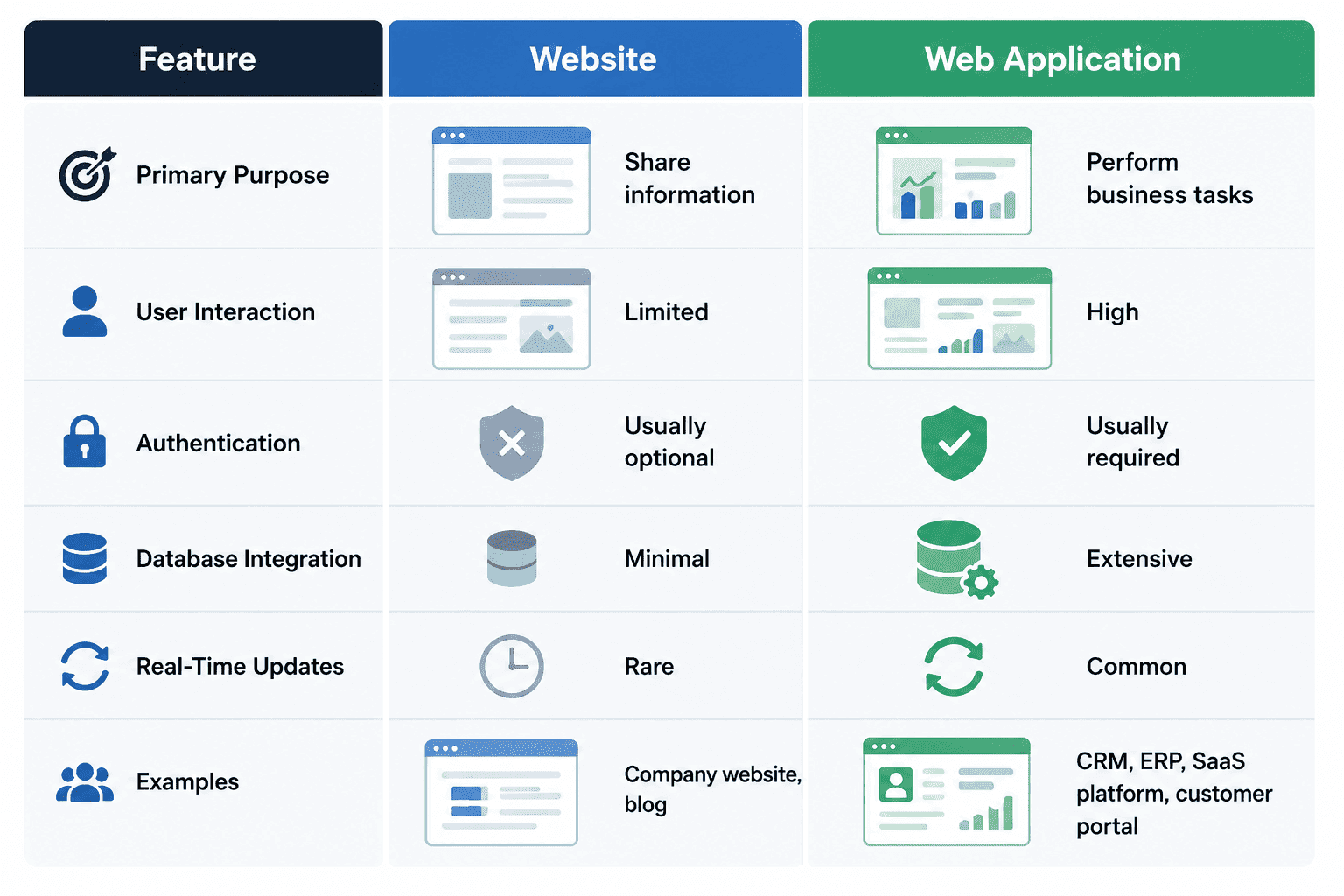
Choosing between a website and a web application depends on your business goals. Organizations requiring customer self-service, workflow automation, or secure data management typically benefit from custom web applications rather than informational websites.
What Types of Web Applications Can Businesses Build?
Modern web application development supports a wide variety of business use cases across industries.
Common examples include:
• SaaS platforms
• Customer portals
• Enterprise Resource Planning (ERP) systems
• Customer Relationship Management (CRM) platforms
• E-commerce applications
• Healthcare management systems
• Learning Management Systems (LMS)
• Logistics and supply chain dashboards
• Manufacturing management platforms
• Financial management applications
For example, a logistics company may require a web application that tracks shipments in real time, while a healthcare provider may need a secure patient portal for appointment scheduling and medical record access.
Why Does Choosing the Right Web App Development Company Matter?
Choosing the right web app development company directly impacts application quality, business scalability, operational efficiency, and long-term return on investment. A capable technology partner contributes far beyond writing code—they help define architecture, reduce technical risks, improve security, and create digital products that evolve with your business.
Selecting an inexperienced development partner often results in delayed delivery, increased maintenance costs, inconsistent user experiences, and technical debt. Conversely, experienced teams adopt structured development methodologies, scalable architectures, and quality assurance practices that reduce project risks from the beginning.
According to the Cloud Native Computing Foundation (CNCF) and SlashData, India is home to approximately 2.25 million cloud-native developers, making it one of the world's largest cloud-native engineering communities. This strong talent pool enables businesses to build modern web applications using cloud-native architectures, containerization, and scalable deployment practices.
Accelerating Digital Transformation
Custom web applications help businesses replace manual processes with automated digital workflows.
For example, manufacturers can automate inventory tracking, healthcare providers can digitize patient management, and financial institutions can streamline customer onboarding through secure browser-based applications.
This reduces operational inefficiencies while improving employee productivity and customer satisfaction.
Building Scalable Business Platforms
Scalable web applications enable organizations to support increasing users, transactions, and business operations without rebuilding the software from scratch.
Modern architectures combine frontend frameworks, cloud infrastructure, APIs, and microservices to ensure long-term flexibility as business requirements evolve. Gartner recommends modular, cloud-native web application architectures that separate presentation, services, and business logic to improve adaptability and maintainability.
Improving Security and Compliance
Security is a fundamental requirement for modern web applications because they often manage sensitive customer, financial, and operational data.
Development teams should implement secure coding practices, multi-factor authentication, encrypted communications, role-based access control, and regular security testing throughout the software development lifecycle.
The Government of India's Guidelines for Indian Government Websites and Apps (GIGW) recommend following standards such as OWASP Top 10, OWASP ASVS, ISO 27001, and secure coding practices before deploying web applications into production environments.
Why Is India a Global Leader in Web App Development?
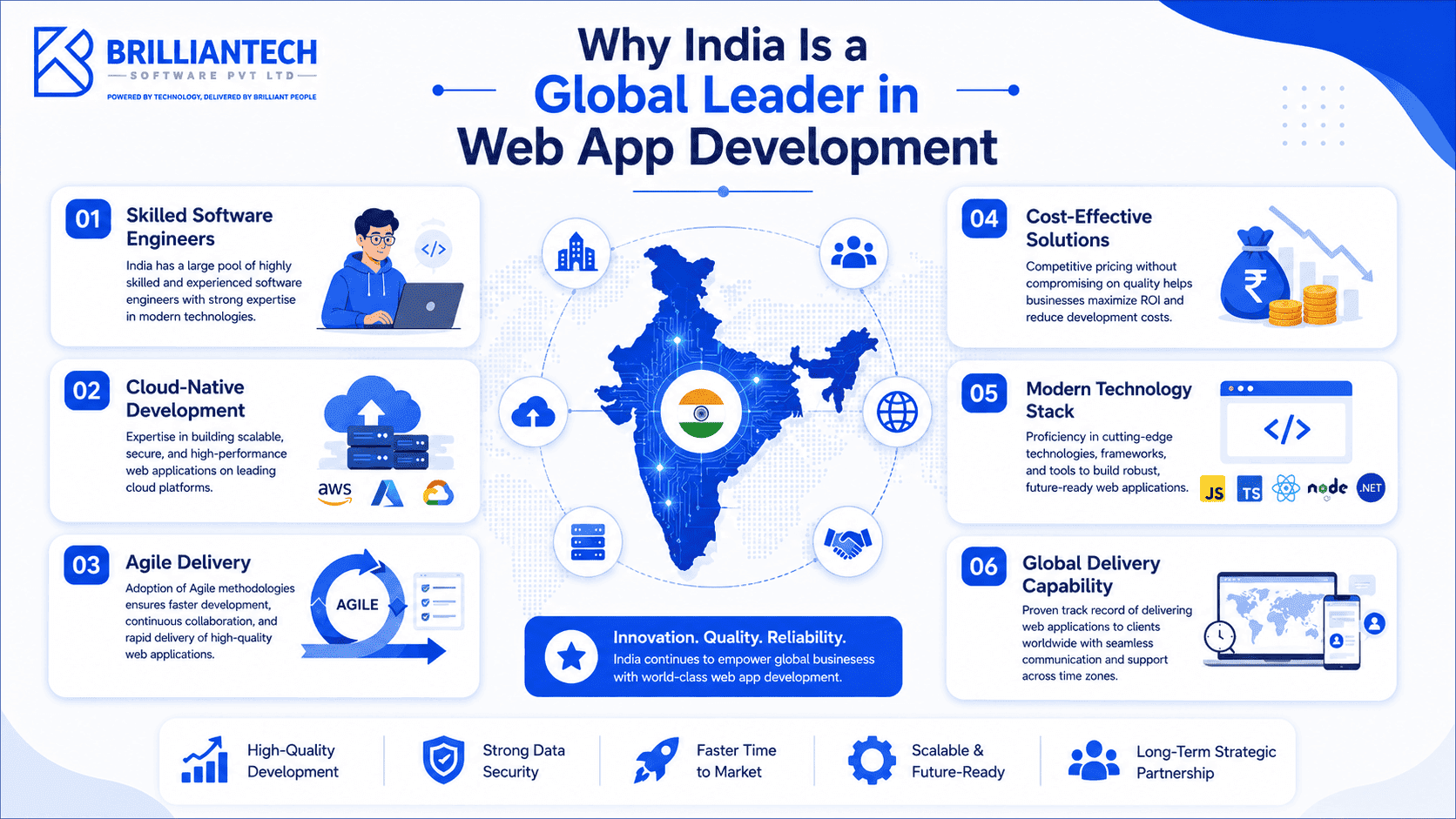
India has become one of the world's leading destinations for web application development because of its skilled engineering workforce, competitive pricing, mature software ecosystem, and proven experience delivering technology solutions for global organizations. Today, startups, SMBs, and Fortune 500 companies work with Indian software development firms to build secure, scalable, and cloud-native web applications.
Unlike many outsourcing destinations that compete primarily on cost, India's software industry now emphasizes innovation, cloud computing, DevOps, AI integration, cybersecurity, and enterprise software engineering.
Access to Highly Skilled Software Engineers
India offers one of the world's largest software engineering talent pools across frontend development, backend engineering, DevOps, cloud computing, cybersecurity, and artificial intelligence.
According to the latest State of Cloud Native Development in India report, approximately 2.25 million developers in India are cloud native, with hybrid cloud adoption reaching 44%, reflecting the country's growing expertise in modern application development.
This extensive engineering ecosystem enables businesses to hire specialists in React, Angular, Vue.js, Node.js, Java, .NET, Python, PostgreSQL, Kubernetes, Docker, AWS, Azure, and Google Cloud.
Competitive Development Costs with Enterprise-Grade Quality
While competitive pricing remains an advantage, businesses increasingly choose Indian development partners because of engineering quality, agile delivery capabilities, and long-term collaboration.
Organizations benefit from:
• Experienced multidisciplinary development teams
• Agile software development methodologies
• Mature quality assurance processes
• Strong English communication
• Flexible engagement models
• Dedicated long-term maintenance and support
These strengths enable companies to accelerate digital transformation initiatives while maintaining high software quality and optimizing development budgets.
What Factors Should You Consider Before Hiring a Web App Development Company?
Choosing the right web app development company requires evaluating technical expertise, industry experience, development methodology, communication practices, security standards, and long-term support—not just project pricing. Businesses that follow a structured evaluation process are more likely to launch scalable, secure, and maintainable applications while reducing development risks.
A web application is a long-term business asset that evolves with changing customer expectations, technologies, and market demands. Selecting the wrong development partner can result in delayed launches, poor user experiences, security vulnerabilities, and expensive redevelopment efforts. By evaluating companies across multiple criteria instead of focusing only on cost, you can choose a partner capable of supporting your business for years to come.
According to the AWS Well-Architected Framework, modern cloud applications should prioritize operational excellence, security, reliability, performance efficiency, cost optimization, and sustainability throughout their lifecycle. These principles provide a practical benchmark when assessing any web application development partner.
Technical Expertise and Modern Technology Stack
Technical expertise determines whether a development company can build applications that remain scalable, secure, and maintainable as your business grows. Experienced teams select technologies based on business requirements rather than following trends.
Leading web application development companies typically work with:
Frontend Technologies
• React
• Angular
• Vue.js
• Next.js
Backend Technologies
• Node.js
• Java
• Spring Boot
• .NET
• Python
• PHP Laravel
Databases
• PostgreSQL
• MongoDB
• MySQL
• Redis
Cloud Platforms
• AWS
• Microsoft Azure
• Google Cloud Platform
Instead of asking "Which framework do you use?", ask:
• Why is React better than Angular for this project?
• How will you ensure scalability?
• How will APIs be secured?
• What cloud architecture do you recommend?
• How will future integrations be handled?
A knowledgeable development team should explain technology choices using business outcomes—not technical jargon.
Industry Experience and Business Understanding
Industry experience helps developers understand business workflows, regulatory requirements, and customer expectations before development begins. While technical skills are essential, domain knowledge significantly reduces project risks.
For example:
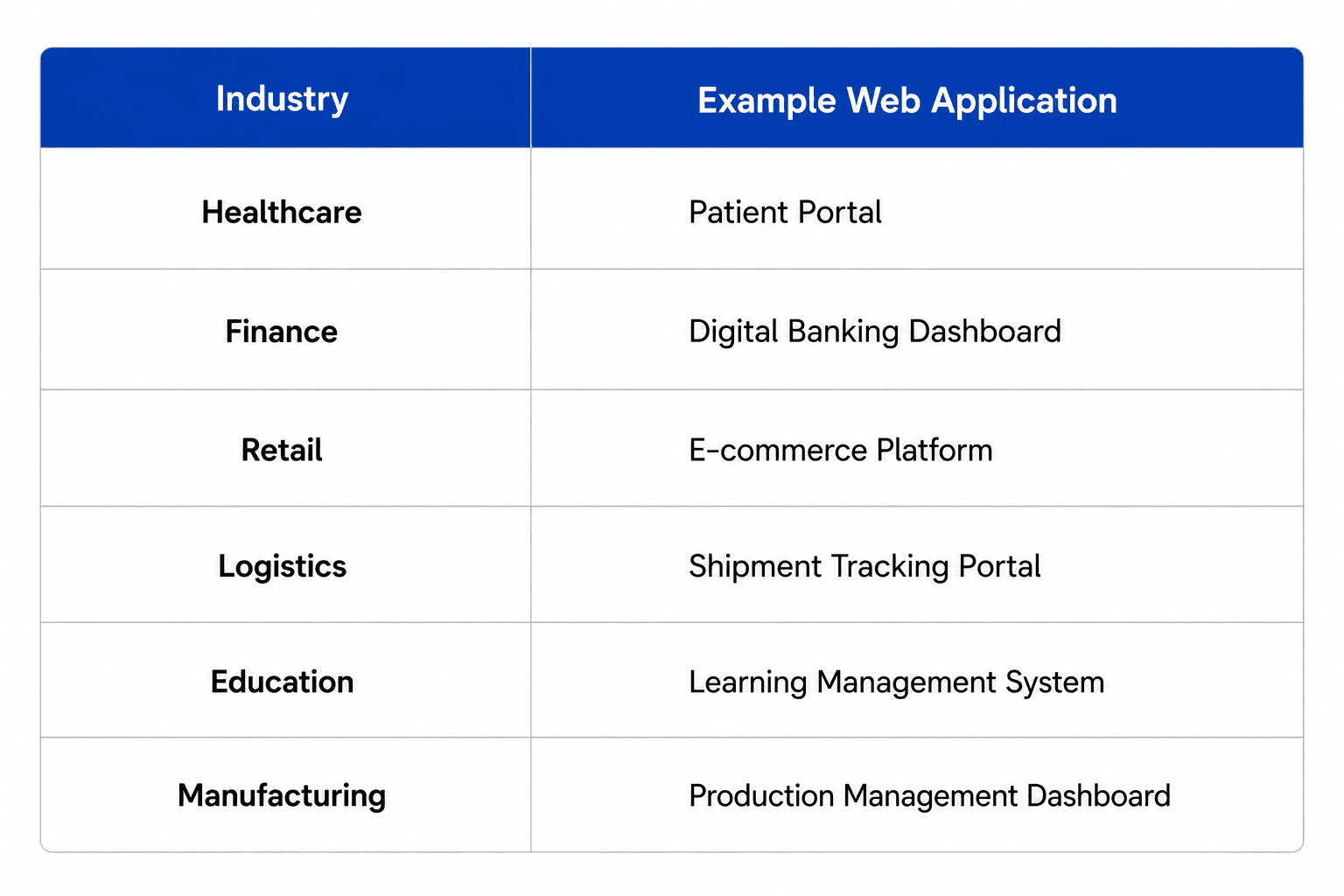
Developers familiar with your industry are more likely to anticipate challenges such as compliance, reporting requirements, workflow automation, and user permissions.
Ask potential vendors to demonstrate similar projects rather than only showing visually appealing interfaces.
Portfolio Quality and Case Studies
A company's portfolio demonstrates its ability to solve real business problems rather than simply showcasing attractive user interfaces. Strong portfolios highlight measurable outcomes, technical complexity, and long-term project success.
Look for evidence of:
• Business challenges solved
• Application scalability
• Performance improvements
• Security implementation
• Cloud deployment
• API integrations
• Mobile responsiveness
• Ongoing maintenance
Instead of reviewing screenshots alone, request detailed case studies that explain:
• Client objectives
• Technical architecture
• Development approach
• Challenges encountered
• Business results achieved
These insights provide a clearer picture of how the company approaches complex software projects.
Agile Development Methodology
Agile software development enables teams to deliver web applications through short, iterative development cycles while continuously incorporating stakeholder feedback. This approach improves flexibility, transparency, and product quality compared to traditional linear development models.
A mature Agile process generally includes:
1. Sprint Planning
2. Requirement Prioritization
3. UI/UX Reviews
4. Development
5. Testing
6. Sprint Demonstration
7. Continuous Feedback
Rather than waiting months for a finished product, stakeholders review progress every few weeks, reducing misunderstandings and allowing business priorities to evolve naturally.
Communication and Project Transparency
Effective communication is one of the strongest predictors of project success. Even highly skilled developers can struggle if expectations, milestones, and responsibilities are not clearly defined.
Professional development companies usually provide:
• Dedicated Project Managers
• Weekly Sprint Reviews
• Progress Reports
• Shared Jira Boards
• Documentation
• Risk Logs
• Roadmaps
• Change Management Process
These practices help clients monitor progress without needing deep technical knowledge.
Development teams should also establish clear escalation procedures, response times, and communication channels before the project begins.
Security Standards and Quality Assurance
Security and quality assurance should be integrated into every phase of the software development lifecycle rather than treated as final testing activities. Modern web applications frequently process customer data, financial information, and sensitive business records, making security a foundational requirement.
Leading development companies typically implement:
• Secure Coding Standards
• Automated Testing
• Manual QA
• Vulnerability Assessments
• Penetration Testing
• Role-Based Access Control
• Data Encryption
• Secure Authentication
The OWASP Application Security Verification Standard (ASVS) is widely used as an open framework for verifying the security of web applications, helping teams establish consistent security requirements during design, development, and testing.
Similarly, the AWS Well-Architected Framework recommends embedding application security throughout the software development lifecycle, including threat modeling, automated security testing, and continuous defect reduction.
Post-Launch Support and Maintenance
Launching a web application is the beginning of its lifecycle, not the end of the project. Continuous maintenance ensures applications remain secure, compatible, and aligned with evolving business requirements.
Long-term support typically includes:
• Bug Fixes
• Security Updates
• Performance Monitoring
• Cloud Infrastructure Management
• Feature Enhancements
• Browser Compatibility Updates
• Backup & Disaster Recovery
• Technical Support
Businesses should clarify maintenance agreements before signing development contracts to avoid unexpected costs after launch.
Transparent Pricing and Engagement Models
Transparent pricing allows businesses to understand exactly what is included in a development proposal and reduces the risk of hidden costs.
Common engagement models include:
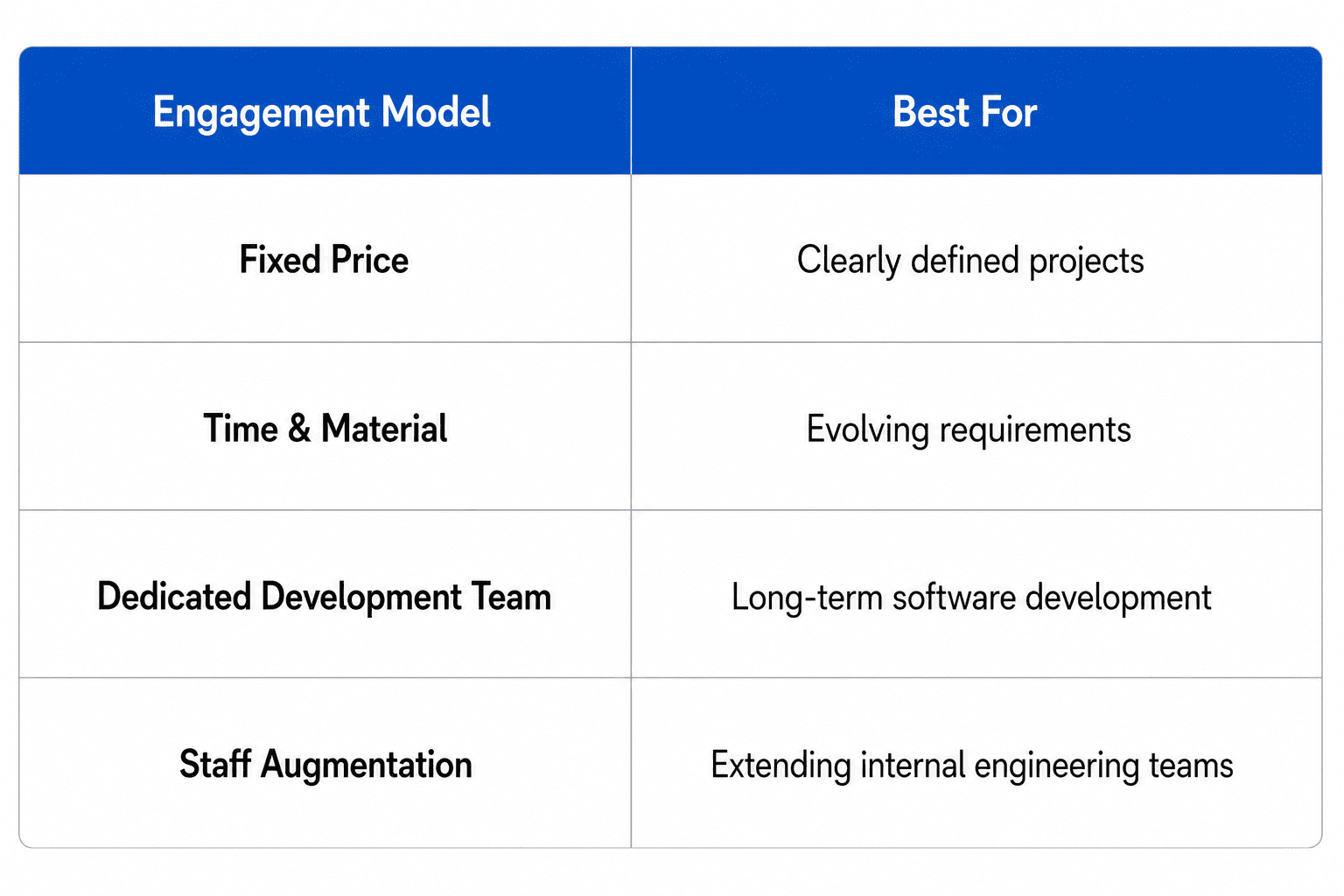
Rather than selecting the lowest quote, compare proposals based on scope, deliverables, communication, technology choices, maintenance, and long-term value.
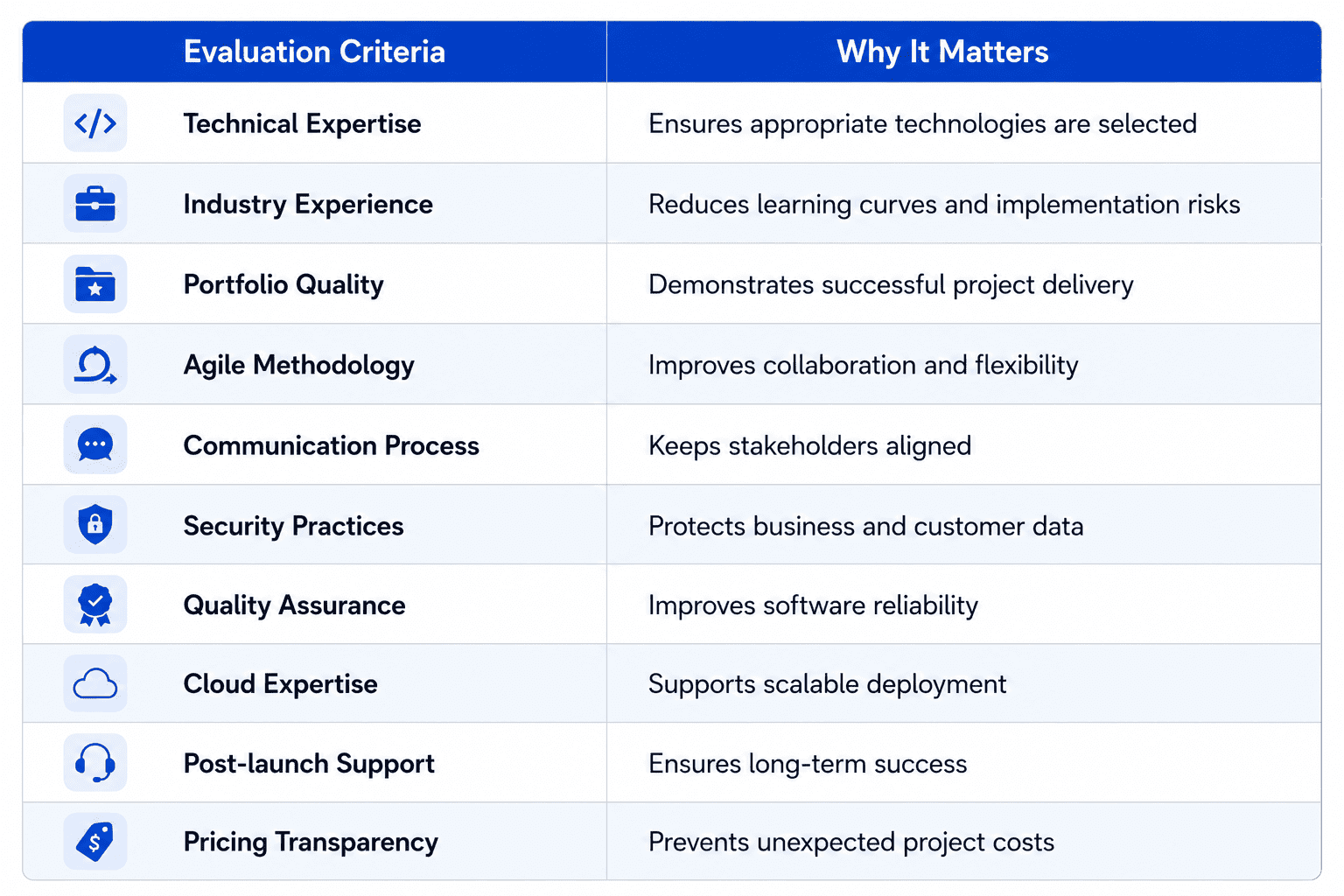
Vendor Evaluation Checklist
Before selecting a web application development company, evaluate each vendor using the following framework:
Which Technologies Are Commonly Used for Modern Web Application Development?
Modern web applications use a combination of frontend frameworks, backend technologies, databases, cloud platforms, and DevOps tools to deliver secure, scalable, and high-performance digital experiences. Rather than relying on a single programming language or framework, leading web app development companies build technology stacks that align with business goals, expected traffic, security requirements, and long-term scalability.
Today's applications must support real-time collaboration, API integrations, responsive interfaces, cloud deployment, and continuous updates. Choosing the right technology stack early in the project improves maintainability, accelerates development, and reduces technical debt over time.
Frontend Technologies for Modern User Experiences
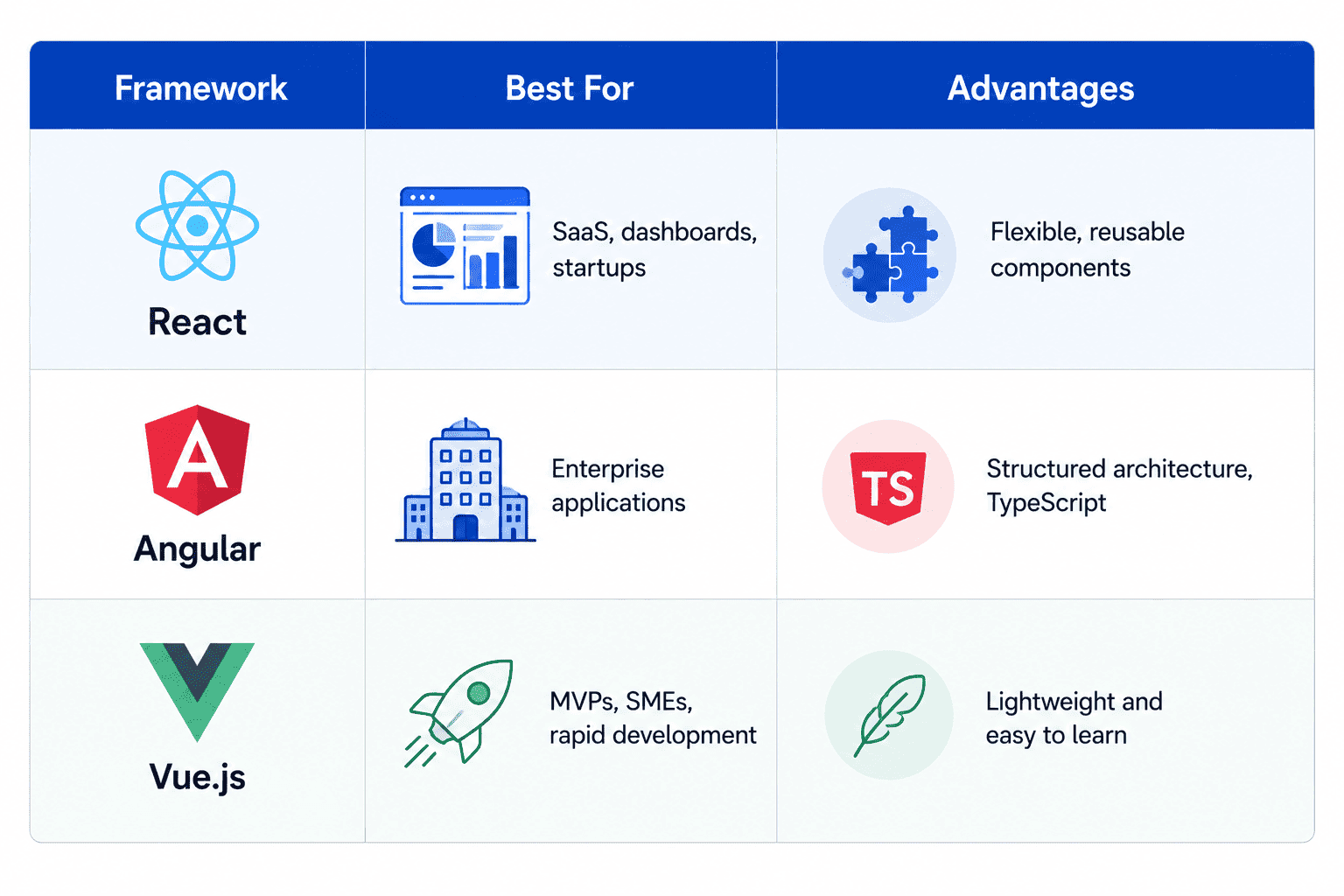
Frontend frameworks are responsible for everything users see and interact with inside a web application. They determine responsiveness, loading speed, accessibility, and the overall user experience.
The three most widely adopted frontend technologies are:
React
React is one of the most popular JavaScript libraries for building interactive user interfaces and single-page applications (SPAs). Its reusable component architecture allows developers to create scalable interfaces while simplifying maintenance.
React is commonly used for:
• SaaS platforms
• Customer dashboards
• Enterprise portals
• E-commerce applications
• Analytics dashboards
AWS also provides official guidance for deploying React-based applications using services such as Amazon S3, CloudFront, and API Gateway, demonstrating React's suitability for scalable production environments.
Angular
Angular is a comprehensive frontend framework maintained by Google. It is particularly well suited for large enterprise applications because it includes built-in routing, dependency injection, form management, and TypeScript support.
Angular is commonly chosen for:
• Banking systems
• Enterprise ERP platforms
• Government portals
• Internal business applications
Organizations that require structured architecture and long-term maintainability often prefer Angular.
Vue.js
Vue.js is a lightweight progressive JavaScript framework known for its simplicity and fast development cycle. It offers excellent performance while remaining easier to learn than many enterprise frameworks.
Vue.js works particularly well for:
• Startup products
• MVP development
• Customer portals
• Progressive Web Applications (PWAs)
The Vue documentation also recommends following OWASP security guidance and coordinating frontend security with backend teams to prevent vulnerabilities such as XSS and CSRF.
Frontend Framework Comparison
Backend Technologies That Power Business Logic
Backend technologies manage application logic, databases, authentication, APIs, and business workflows. Selecting the right backend depends on performance requirements, scalability goals, and existing enterprise infrastructure.
Leading web application development companies commonly use:
Node.js
Node.js enables fast, event-driven application development and is ideal for:
• Real-time applications
• Chat platforms
• Collaboration software
• API-first applications
• Streaming services
Java & Spring Boot
Java remains one of the most trusted technologies for enterprise software because of its stability, security, and mature ecosystem.
It is widely used for:
• Banking software
• Insurance platforms
• ERP systems
• Healthcare applications
Microsoft .NET
.NET is preferred by organizations already using Microsoft technologies.
Typical use cases include:
• Enterprise portals
• CRM systems
• Internal workflow automation
• Government applications
Microsoft recommends designing App Service workloads with scalability, caching, managed identities, and HTTP/2 support to improve reliability and performance.
Python
Python supports rapid development while offering a rich ecosystem for:
• Artificial Intelligence
• Machine Learning
• Data Analytics
• Automation Platforms
• Scientific Applications
PHP & Laravel
Laravel remains one of the most popular PHP frameworks because it accelerates secure web application development through built-in authentication, routing, validation, and ORM capabilities.
It is frequently used for:
• Content Management Systems
• Customer Portals
• Business Applications
• Small to Medium Enterprise Platforms
Databases for Reliable Data Management
Databases store, organize, and retrieve business information securely while supporting application performance and scalability.
Common database technologies include:
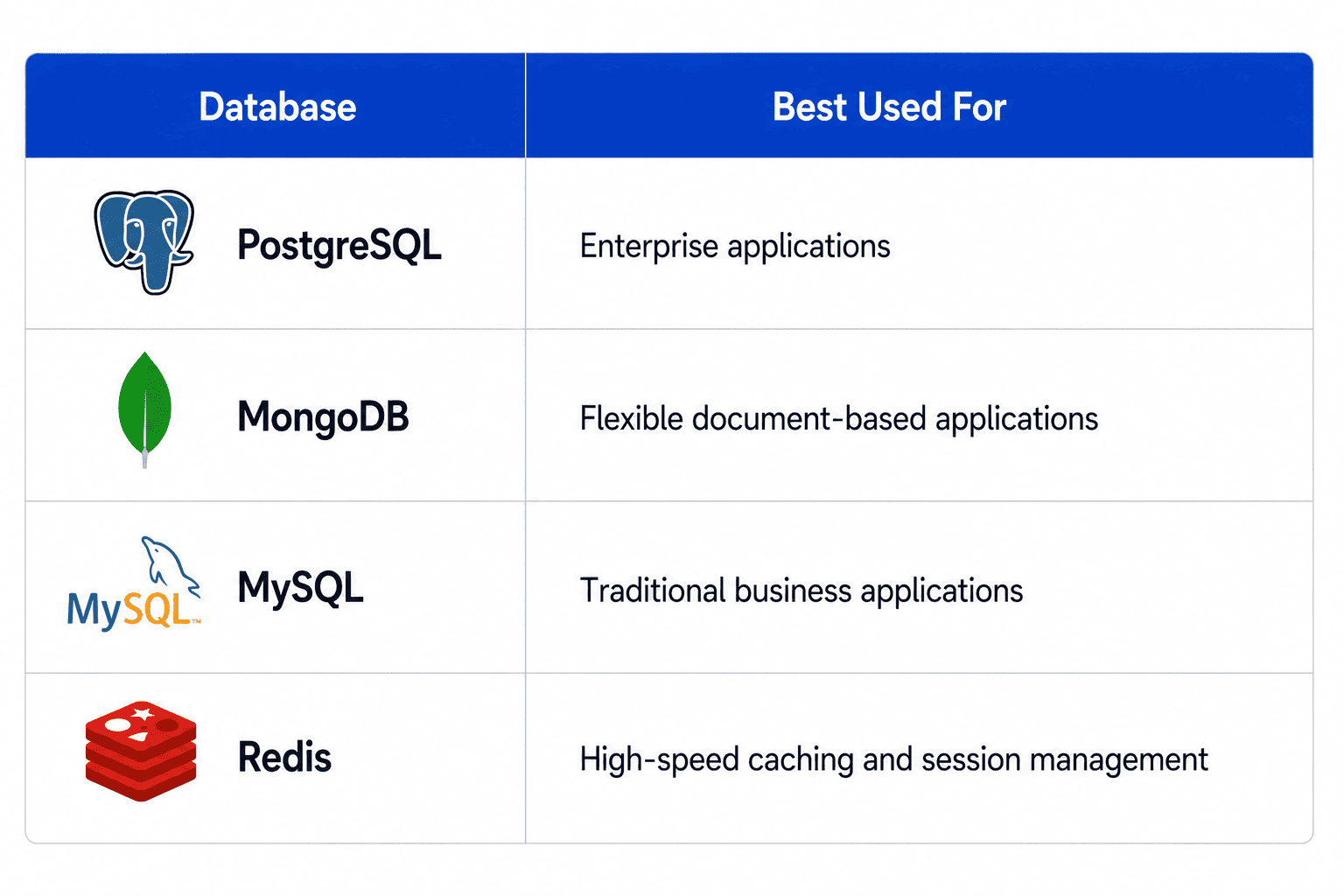
Selecting the appropriate database depends on application architecture, expected data volume, reporting requirements, and scalability objectives.
Cloud Platforms for Scalability
Cloud infrastructure allows businesses to deploy, monitor, and scale web applications without managing physical servers. Cloud-native deployment also improves disaster recovery, security, and operational efficiency.
The three dominant cloud platforms include:
Amazon Web Services (AWS)
AWS provides services for:
• Compute
• Storage
• Databases
• Serverless Computing
• AI
• DevOps
• Monitoring
AWS recommends architecting web applications using scalable cloud services, content delivery networks (CDNs), identity management, logging, and infrastructure-as-code to improve resilience
Microsoft Azure
Azure integrates closely with Microsoft technologies including Windows Server, Active Directory, SQL Server, and .NET applications.
It is frequently selected by enterprise organizations migrating existing business systems to the cloud.
Google Cloud Platform (GCP)
Google Cloud is widely adopted for:
• Kubernetes
• Artificial Intelligence
• Big Data
• Cloud-native applications
• High-performance analytics
DevOps and Development Tools
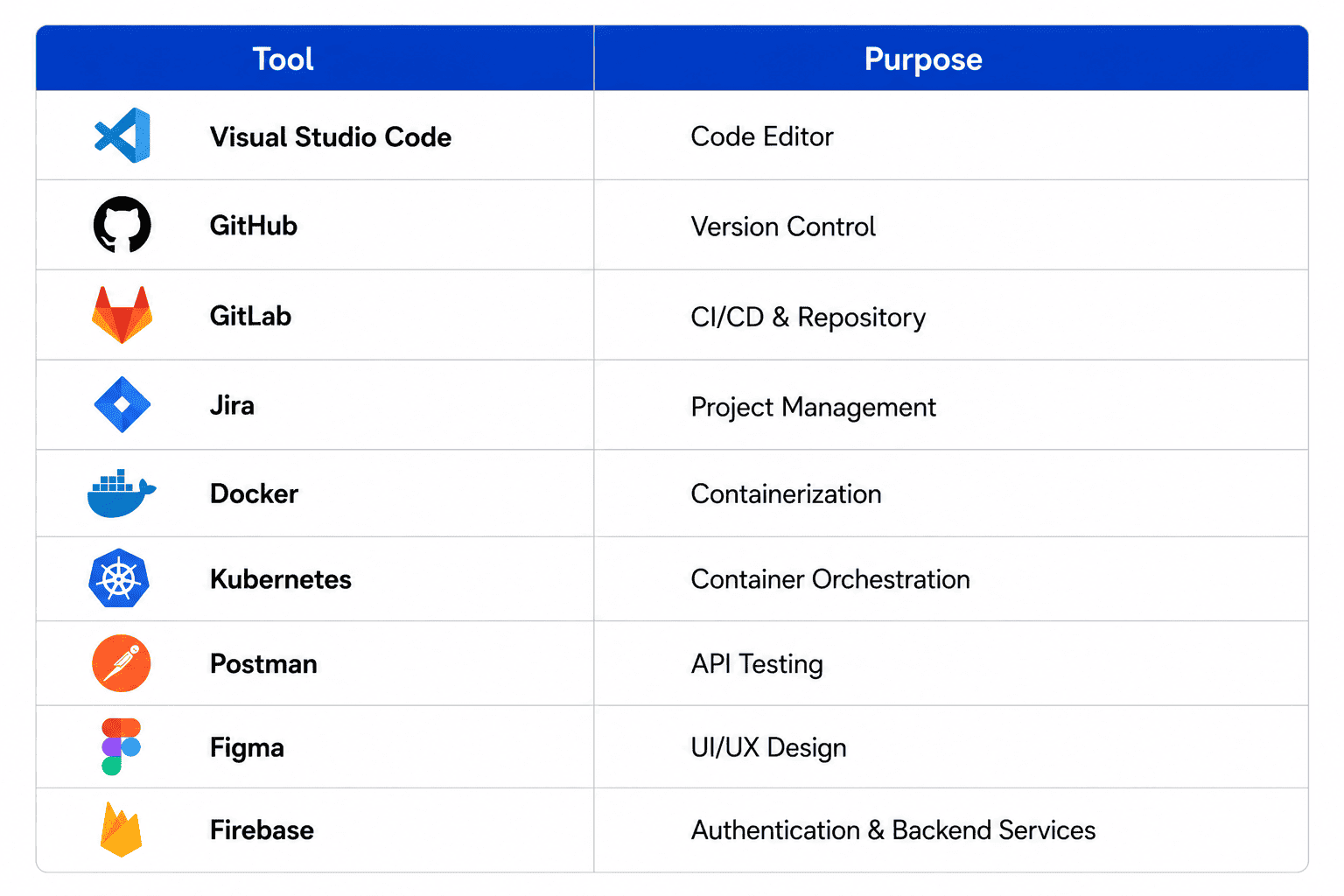
Modern web application development relies on DevOps practices that automate software delivery, improve collaboration, and reduce deployment risks.
Frequently used tools include:
Why Do Businesses Choose BrillianTech for Web App Development?
Businesses choose BrillianTech because it combines modern engineering practices, agile delivery, cloud-native development, and long-term technical support to build scalable web applications that solve real business problems. Rather than delivering one-size-fits-all software, BrillianTech develops custom solutions aligned with each client's operational goals, industry requirements, and future growth plans.
Whether you're launching a SaaS platform, modernizing an enterprise application, or developing a customer-facing portal, BrillianTech focuses on creating secure, high-performance applications that deliver measurable business value.
End-to-End Development Services
BrillianTech manages the complete software development lifecycle, including:
• Business Analysis
• Requirement Gathering
• UI/UX Design
• Software Architecture
• Frontend Development
• Backend Development
• API Integration
• Cloud Deployment
• Quality Assurance
• Maintenance & Support
This integrated approach improves collaboration, reduces vendor dependencies, and ensures consistency throughout the project lifecycle.
Beyond end-to-end software development, our Web Application Development Services enable businesses to build scalable, secure, and user-centric web applications that deliver measurable business value.
Agile Delivery with Dedicated Project Management
BrillianTech follows Agile development methodologies, enabling clients to review progress through regular sprint demonstrations, milestone updates, and collaborative planning sessions.
Each project benefits from:
• Dedicated Project Managers
• Sprint Planning
• Transparent Communication
• Risk Management
• Continuous Feedback
• Incremental Releases
This structured workflow helps reduce delays while allowing businesses to adapt to changing priorities throughout development.
Secure, Scalable, and Future-Ready Applications
Security and scalability are incorporated from the earliest stages of development rather than added after deployment.
BrillianTech emphasizes:
• Secure Coding Practices
• Role-Based Access Control
• API Security
• Cloud-Native Architecture
• Automated Testing
• Performance Optimization
• Continuous Monitoring
These practices align with widely recognized frameworks such as the OWASP Application Security Verification Standard (ASVS), which provides a structured approach for verifying the security of web applications.
Technology Expertise
BrillianTech's engineering teams work across modern technologies including:
• React
• Angular
• Vue.js
• Node.js
• Java
• Spring Boot
• .NET
• Python
• PHP Laravel
• PostgreSQL
• MongoDB
• AWS
• Azure
• Google Cloud
• Docker
• Kubernetes
This broad expertise enables businesses to choose technologies based on project requirements rather than vendor limitations.
What Is the Typical Web App Development Process?
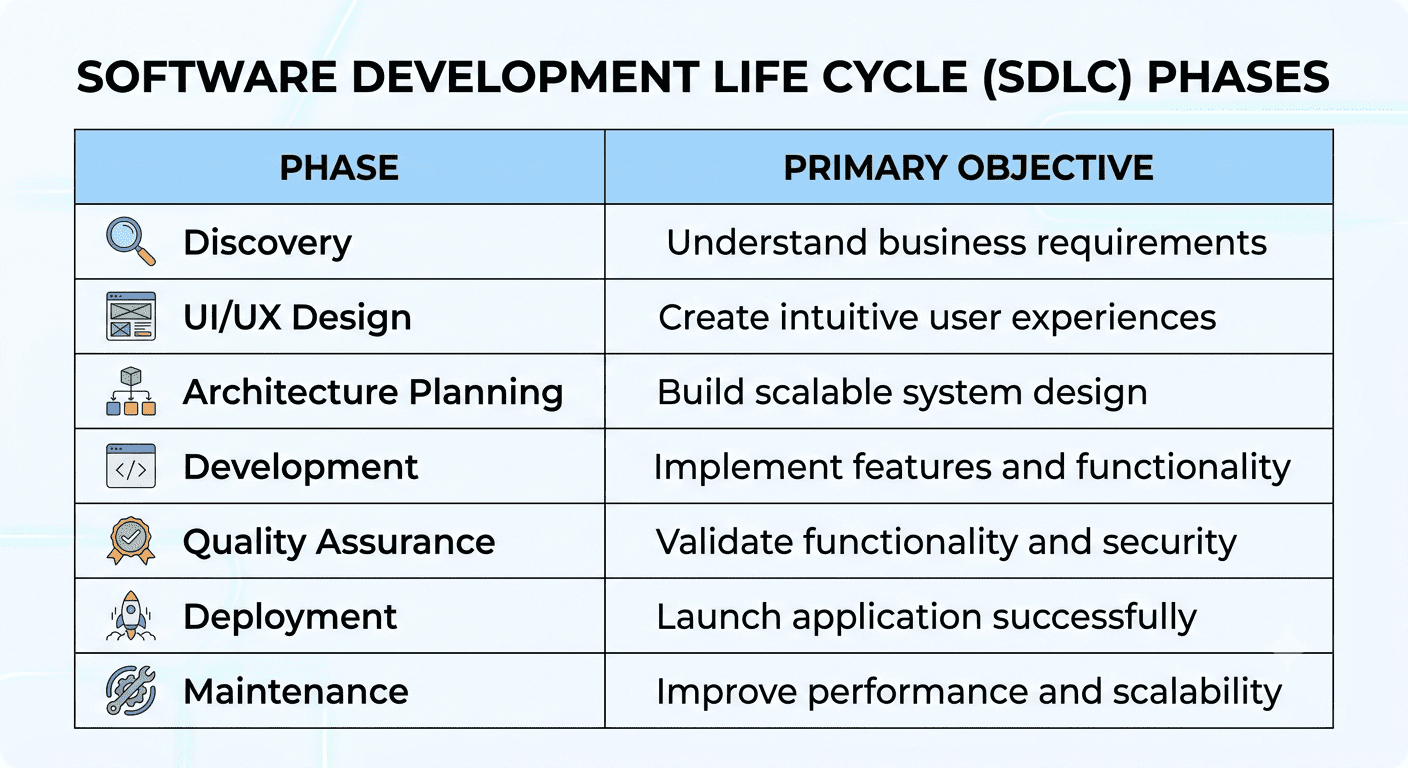
The web app development process is a structured lifecycle that transforms a business idea into a secure, scalable, and maintainable web application. A well-defined process reduces project risks, improves collaboration, and ensures every stage—from planning to post-launch support—aligns with business objectives.
Leading web application development companies follow Agile and DevOps practices to deliver software in incremental releases instead of waiting until the end of the project. This approach enables continuous feedback, faster iterations, and better software quality. AWS also recommends integrating development, testing, deployment, and operational feedback throughout the software development lifecycle to improve delivery speed and deployment safety.
Step 1: Discovery and Business Analysis
Discovery is the foundation of every successful web application project. During this stage, developers work closely with stakeholders to understand business goals, user requirements, operational workflows, and technical constraints before writing any code.
Typical discovery activities include:
• Stakeholder interviews
• Business process mapping
• Competitor analysis
• User persona creation
• Feature prioritization
• Technical feasibility assessment
For example, a logistics company may prioritize real-time shipment tracking, while a SaaS startup may focus on user onboarding and subscription management.
The output of this phase is usually:
• Project roadmap
• Product requirements document (PRD)
• User stories
• Initial timeline
• Budget estimation
Step 2: UI/UX Design and Prototyping
UI/UX design converts business requirements into intuitive user experiences. Good design improves usability, reduces learning curves, and increases customer satisfaction.
Design activities include:
• Information Architecture
• User Flow Design
• Wireframes
• Interactive Prototypes
• High-Fidelity UI Designs
• Design System Creation
Tools commonly used include:
• Figma
• Adobe XD
• Miro
Looking to create intuitive digital experiences? Explore our UI/UX Design Services to discover how we design user-centric interfaces that improve usability, engagement, and customer satisfaction.
Step 3: Architecture Planning
Software architecture defines how different components of a web application interact with each other. A scalable architecture supports future growth while maintaining reliability and performance.
Architecture planning typically covers:
• Frontend framework
• Backend technology
• Database selection
• API architecture
• Authentication strategy
• Cloud infrastructure
• Third-party integrations
Well-planned architecture reduces technical debt and makes future feature development significantly easier.
Step 4: Development
Development transforms approved designs into functional software through iterative Agile sprints. Instead of building the entire application at once, teams release working features incrementally.
Development generally includes:
• Frontend development
• Backend development
• Database implementation
• API integrations
• Authentication
• Payment gateway integration
• Notification systems
Continuous code reviews and version control help maintain consistency throughout the project.
Step 5: Testing and Quality Assurance
Quality assurance verifies that every feature functions correctly, performs reliably, and meets security standards before deployment.
Testing usually includes:
• Functional Testing
• Integration Testing
• Performance Testing
• Cross-Browser Testing
• Security Testing
• User Acceptance Testing (UAT)
The OWASP Application Security Verification Standard (ASVS) provides an industry-recognized framework for verifying application security controls, while AWS recommends integrating automated testing and security reviews throughout the development lifecycle instead of treating them as final-stage activities.
Explore our Quality Assurance Testing Services to learn how we ensure software quality through comprehensive functional, performance, security, and compatibility testing.
Step 6: Deployment and Launch
Deployment moves the web application from development environments into production. Modern deployment practices minimize downtime while ensuring system stability.
Deployment activities include:
• Infrastructure provisioning
• CI/CD pipeline execution
• Database migration
• Load balancing
• Monitoring configuration
• Security validation
Cloud platforms such as AWS, Microsoft Azure, and Google Cloud support automated deployment pipelines that simplify software releases and ongoing updates.
Step 7: Maintenance and Continuous Improvement
A successful web application continues evolving after launch through continuous monitoring, maintenance, and feature enhancements. Regular updates help applications remain secure, compatible, and aligned with changing business requirements.
Ongoing maintenance typically includes:
• Performance monitoring
• Bug fixes
• Security patches
• Browser compatibility updates
• Feature enhancements
• Infrastructure optimization
Businesses that invest in continuous improvement generally achieve better long-term software performance than those treating launch as the project's endpoint.
Web App Development Lifecycle;
What Development Tools Help Build Modern Web Applications?
Modern web application development relies on specialized tools that improve collaboration, automate workflows, enhance code quality, and accelerate software delivery. Choosing the right development tools increases productivity while reducing manual errors throughout the software development lifecycle.
Common tools include:
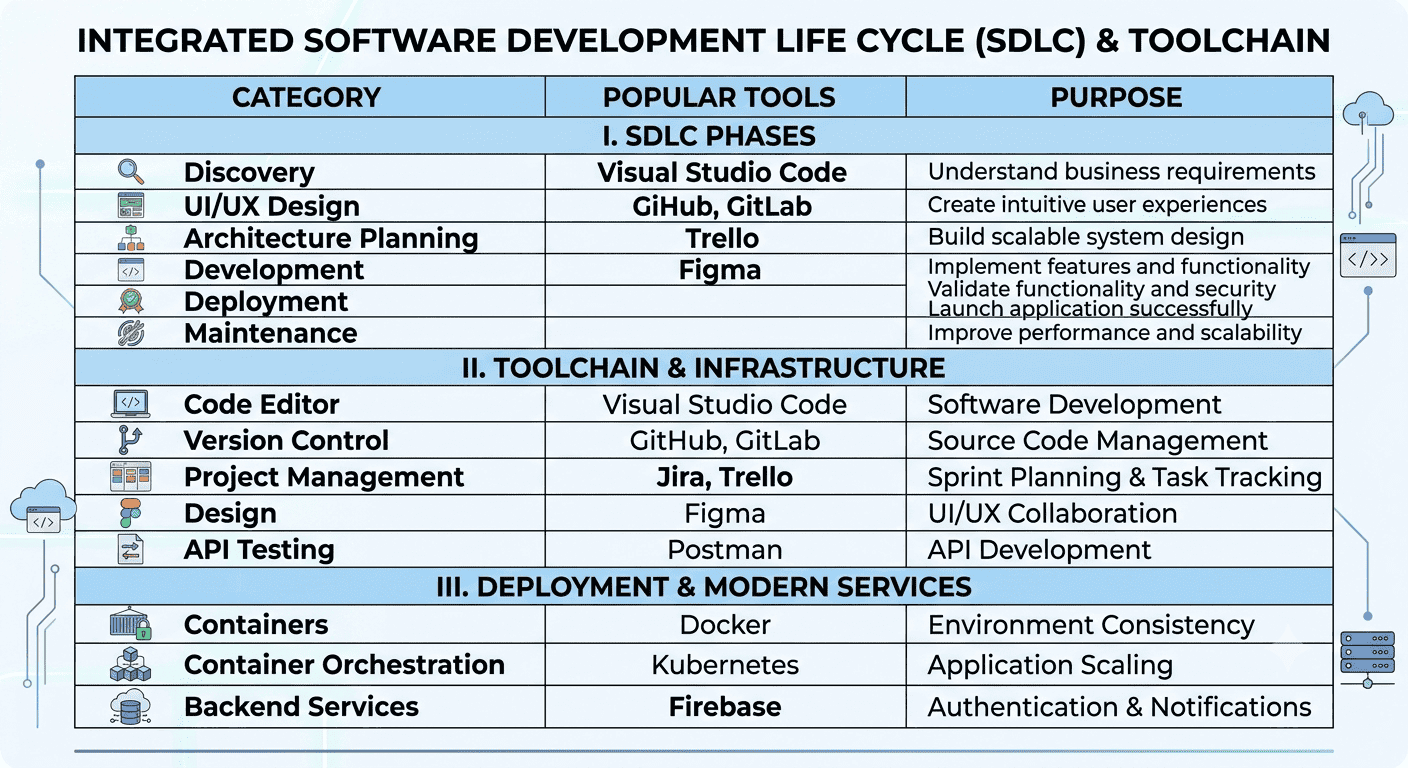
These tools enable distributed development teams to collaborate efficiently while maintaining high software quality.
How Much Does Custom Web Application Development Cost in India?
The cost of custom web application development in India depends on project complexity, technology stack, integrations, security requirements, team size, and development timeline. Rather than focusing solely on hourly rates, businesses should evaluate the total value delivered over the application's lifecycle.
The following ranges provide a general estimate:
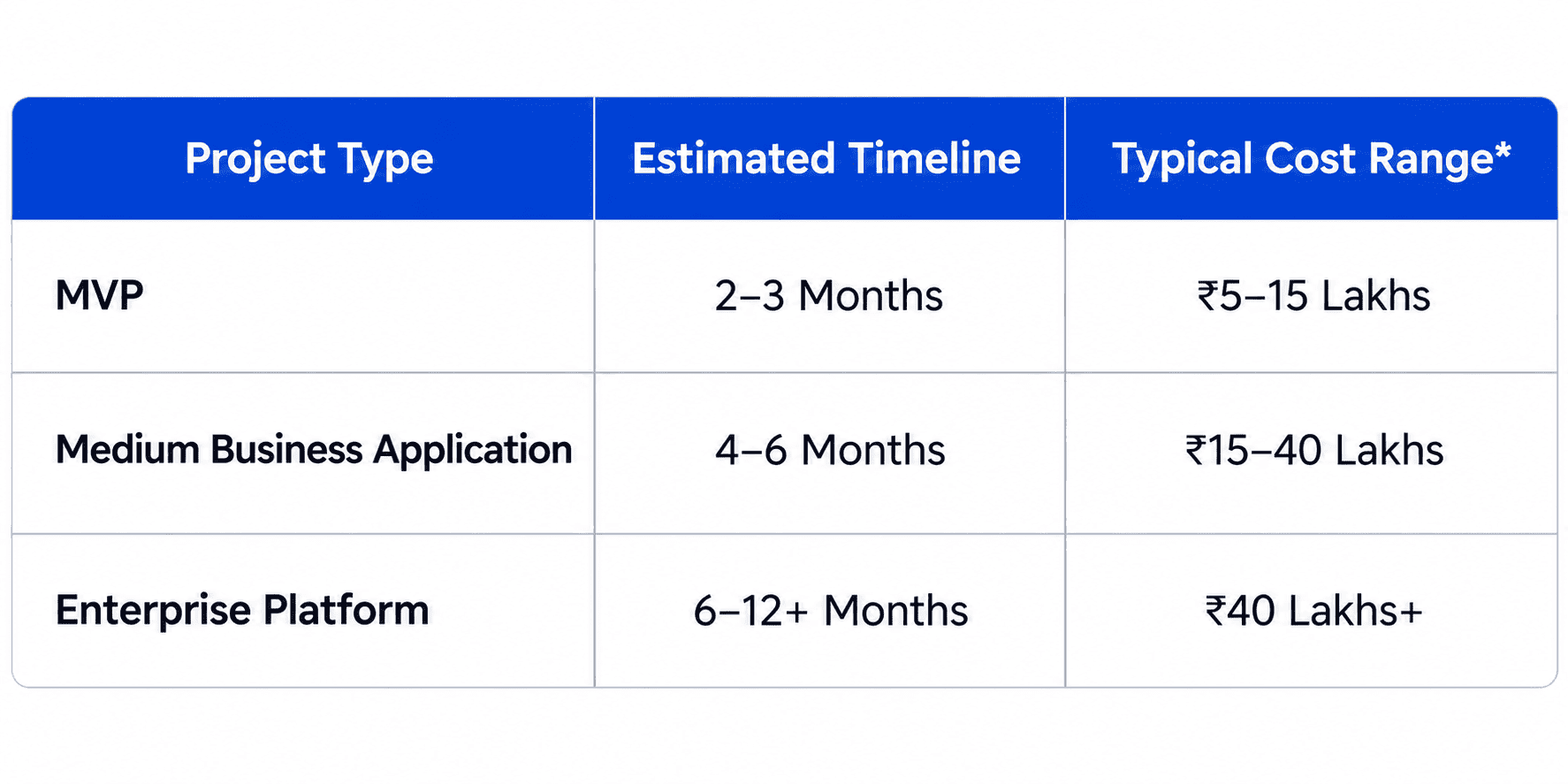
*Actual costs vary depending on business requirements, integrations, compliance needs, and ongoing support.
Factors influencing pricing include:
• Number of features
• UI/UX complexity
• Third-party integrations
• Cloud infrastructure
• Security requirements
• AI or analytics capabilities
• Maintenance agreements
Businesses should evaluate proposals based on long-term business value rather than selecting the lowest-cost provider.
How Long Does It Take to Develop a Custom Web Application?
Most custom web applications require between two and twelve months to complete, depending on project scope and complexity. Applications with advanced workflows, enterprise integrations, or regulatory requirements generally require longer development cycles.
Typical timelines include:
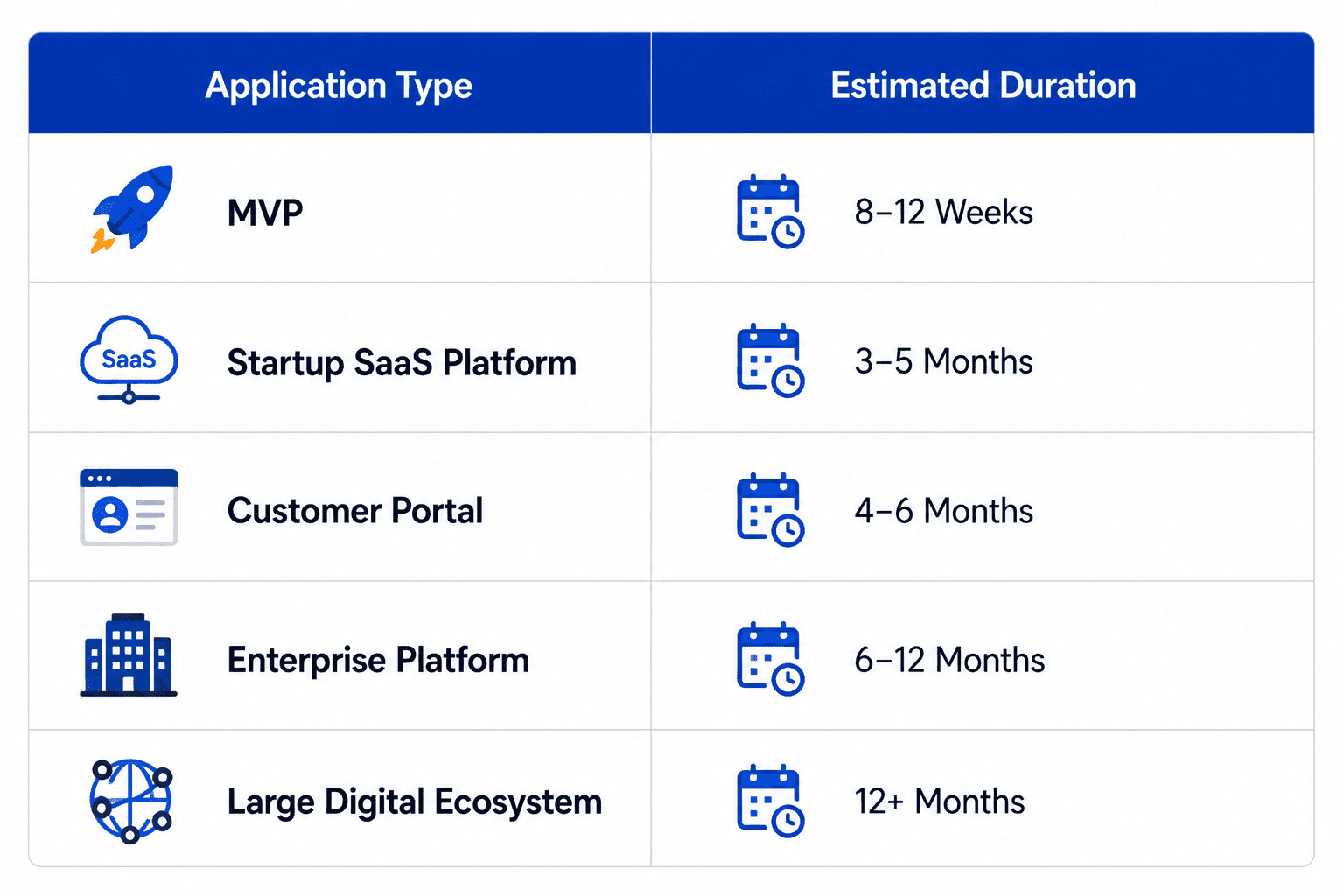
Agile development allows businesses to launch initial versions sooner while continuously improving the application through future releases.
What Mistakes Should Businesses Avoid When Choosing a Development Partner?
Many web application projects fail not because of poor ideas, but because businesses choose the wrong development partner or follow an ineffective vendor selection process. Avoiding common hiring mistakes significantly improves project quality, reduces delays, and increases long-term return on investment.
Instead of focusing solely on pricing or delivery timelines, evaluate a development company based on technical expertise, communication, security practices, scalability, and long-term support. Organizations that invest time in vendor evaluation are more likely to build reliable applications that continue delivering value for years.
Choosing Based Only on Price
Selecting the lowest-cost proposal often results in higher long-term expenses. While controlling budgets is important, choosing a vendor solely because they offer the cheapest estimate may lead to compromised code quality, inadequate testing, and limited post-launch support.
For example, a lower-cost proposal may exclude security testing, cloud optimization, documentation, or maintenance. These omissions frequently result in additional costs after deployment.
Instead, compare vendors based on:
• Technical capabilities
• Team expertise
• Development methodology
• Support services
• Security practices
• Total project value
Ignoring Technical Expertise
A development company's technology expertise should match your project's complexity and long-term goals. An experienced team can recommend the right architecture, frameworks, and cloud infrastructure rather than applying the same technology stack to every project.
Before hiring, ask questions such as:
• Which frontend framework is most suitable?
• How will scalability be handled?
• How will APIs be secured?
• What cloud architecture is recommended?
• How will future integrations be supported?
These discussions help determine whether the team understands both technology and business requirements.
Poor Requirement Definition
Unclear project requirements frequently lead to scope changes, missed expectations, and increased development costs. Investing time in discovery and requirement analysis before development begins helps both parties establish realistic timelines and budgets.
Prepare documentation covering:
• Business objectives
• User roles
• Core features
• Integrations
• Security requirements
• Reporting needs
• Success metrics
The more clearly your requirements are defined, the smoother the development process becomes.
Overlooking Long-Term Maintenance
Web applications require continuous maintenance after launch to remain secure, compatible, and high-performing. Businesses sometimes assume that deployment marks the end of the project, when in reality it marks the beginning of the application's operational lifecycle.
AWS recommends incorporating continuous monitoring, automated deployments, and regular updates as part of ongoing application management to improve reliability and reduce operational risk.
Ask vendors about:
• Maintenance agreements
• Service Level Agreements (SLAs)
• Response times
• Security updates
• Feature enhancement process
Not Reviewing Previous Projects
Past projects provide valuable evidence of a company's ability to solve real business challenges. Instead of reviewing only screenshots or design mockups, request detailed case studies explaining the client's objectives, technical approach, and measurable business outcomes.
A strong portfolio should demonstrate:
• Complex business workflows
• Enterprise integrations
• Cloud deployments
• API development
• Performance optimization
• Security implementation
What Happens After a Web Application Is Launched?
Launching a web application is the beginning of continuous improvement rather than the completion of the project. Successful digital products evolve through ongoing monitoring, optimization, security updates, and feature enhancements.
Organizations that continuously improve their applications remain competitive while responding more effectively to changing customer expectations and market conditions.
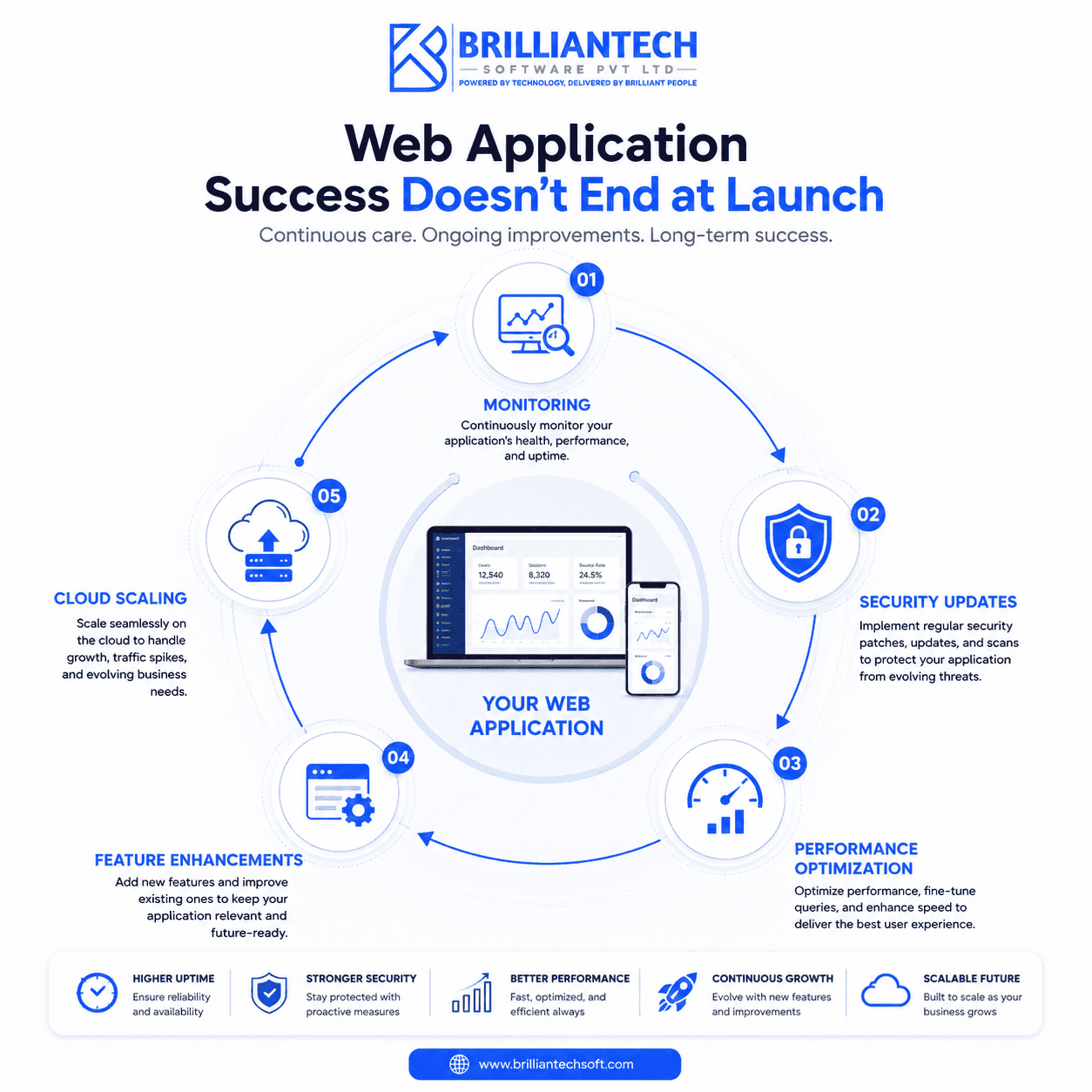
Performance Monitoring
Modern monitoring platforms help businesses track:
• Application availability
• Response times
• Infrastructure utilization
• Error rates
• User behavior
• API performance
These insights enable development teams to identify issues before they affect users.
Security Updates
Security threats evolve continuously.
The OWASP Application Security Verification Standard (ASVS) recommends ongoing verification of authentication, access control, cryptography, session management, and API security throughout an application's lifecycle—not just during initial development.
Regular security reviews help organizations:
• Protect customer information
• Maintain compliance
• Reduce vulnerabilities
• Improve stakeholder trust
Continuous Feature Development
Business requirements rarely remain static.
After launch, companies commonly introduce:
• New dashboards
• Workflow automation
• Third-party integrations
• Mobile compatibility
• AI capabilities
• Analytics enhancements
Agile development allows these improvements to be delivered incrementally without disrupting existing operations.
What's Next? A Practical Hiring Checklist
Choosing the right web application development company becomes easier when you follow a structured decision-making process. Rather than evaluating dozens of vendors randomly, follow these practical steps to identify a technology partner that aligns with your business goals.
Hiring Checklist
✅ Define your business objectives
✅ Document application requirements
✅ Prioritize must-have features
✅ Establish your project budget
✅ Shortlist experienced web app development companies
✅ Review portfolios and case studies
✅ Evaluate technical expertise
✅ Verify security and quality assurance practices
✅ Schedule discovery meetings
✅ Request detailed project estimates
✅ Compare communication processes
✅ Assess post-launch support
✅ Select a long-term technology partner
Following this framework helps reduce project risk while improving the likelihood of delivering a successful digital product.
Conclusion
Choosing the right web app development company is one of the most important decisions you'll make when investing in digital transformation. The right technology partner contributes far more than software development—they provide strategic guidance, scalable architecture, secure engineering practices, and long-term support that help your business grow.
India continues to be a preferred destination for custom web application development because of its skilled engineering workforce, mature technology ecosystem, and proven ability to deliver solutions for startups, SMEs, and global enterprises. By evaluating technical expertise, industry experience, communication, security, and post-launch capabilities, businesses can significantly reduce implementation risks and maximize return on investment.
BrillianTech combines modern technology stacks, agile development methodologies, cloud-native architecture, and end-to-end project delivery to help organizations build secure, scalable, and future-ready web applications. Whether you're building a new SaaS platform or modernizing an existing business application, Contact BrillianTech Web Development Experts to explore the best approach for your project.