
Introduction
Retail and e-commerce are evolving faster than ever as customer expectations continue to rise. Today's consumers expect seamless shopping experiences across websites, mobile apps, social media, and physical stores, while businesses must simultaneously manage inventory, personalize customer interactions, and scale operations efficiently. Digital transformation has become essential for retailers looking to remain competitive in an increasingly connected marketplace.
Whether you're modernizing an existing retail business, launching a new e-commerce platform, or implementing AI-powered automation, choosing the right technology strategy can directly impact customer satisfaction, operational efficiency, and long-term growth. In this guide, you'll discover the future of retail and e-commerce in 2026, explore the technologies reshaping the industry, and learn how BrillianTech helps businesses build scalable, intelligent, and future-ready retail solutions.
Key Takeaways
• Digital transformation is redefining how retailers engage customers, optimize operations, and compete in an increasingly digital marketplace.
• Artificial Intelligence (AI) enables retailers to automate inventory management, personalize shopping experiences, forecast demand, and improve operational efficiency.
• Omnichannel commerce allows customers to enjoy a consistent shopping experience across websites, mobile apps, physical stores, and social media platforms.
• Retail automation reduces operational costs while improving order processing, pricing, inventory control, and customer service.
• Data-driven decision making empowers retailers to understand customer behavior, optimize marketing campaigns, and increase profitability.
• Scalable cloud-based retail solutions help businesses grow without rebuilding their technology infrastructure.
• BrillianTech's Retail & E-Commerce Solutions combine AI, automation, cloud technologies, and custom software development to help businesses thrive in the future of digital commerce.
What Is the Future of Retail & E-Commerce?
The future of retail and e-commerce is a technology-driven ecosystem where artificial intelligence, automation, cloud computing, and data analytics work together to deliver personalized, efficient, and connected shopping experiences across every customer touchpoint.
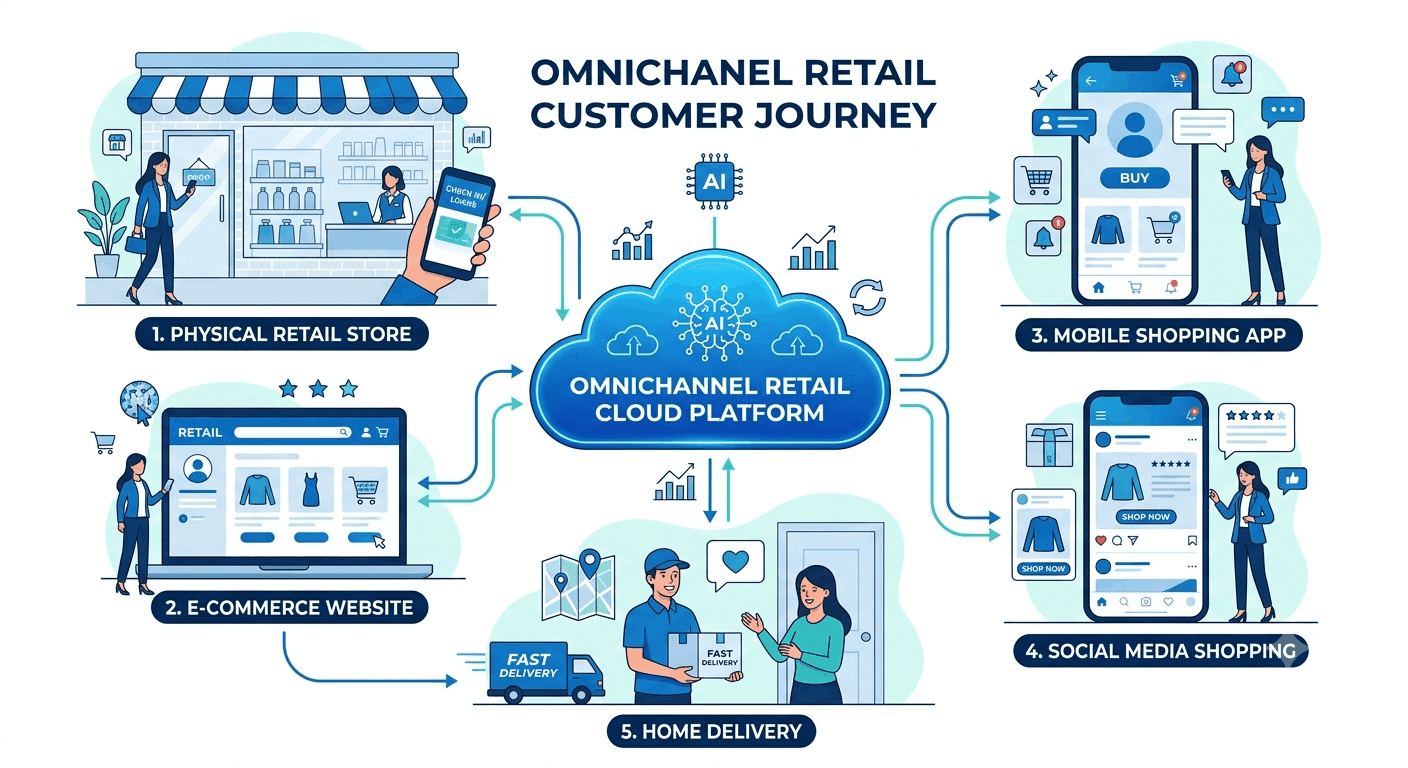
Unlike traditional retail models that treated physical stores and online channels separately, modern retail focuses on creating a unified experience regardless of where customers interact with a brand. Whether customers browse products on a website, purchase through a mobile application, visit a physical store, or engage through social media, they expect the experience to remain seamless and consistent.
According to Statista (2025), global retail e-commerce sales are projected to surpass $8 trillion by 2028, demonstrating the rapid acceleration of digital commerce worldwide. Businesses investing in digital transformation today are positioning themselves for long-term growth in an increasingly competitive marketplace. — Statista, 2025
For businesses looking to modernize their digital commerce strategy, BrillianTech's Custom Software Development Services help create scalable retail platforms tailored to unique business requirements.
How Has Retail Evolved?
Retail has evolved from traditional brick-and-mortar stores into connected digital ecosystems powered by intelligent technologies. Customers no longer distinguish between online and offline shopping—they simply expect convenience, speed, and personalization.
Several technologies have accelerated this transformation:
• Artificial Intelligence
• Cloud Computing
• Mobile Applications
• Internet of Things (IoT)
• Big Data Analytics
• Automation
• Digital Payments
• Augmented Reality (AR)
For example, Walmart uses AI and machine learning to improve demand forecasting and inventory management across its global retail operations. By analyzing historical sales, weather patterns, local events, and seasonal trends, Walmart can replenish inventory more accurately, helping reduce stockouts and excess inventory. - Walmart Global Tech, NVIDIA AI Case Studies
This evolution has shifted retail from simply selling products to delivering personalized customer experiences.
Why Are Businesses Investing More in Digital Commerce?
Businesses are investing heavily in digital commerce because consumers increasingly prefer convenience, personalization, and faster purchasing experiences.
According to McKinsey & Company, companies that successfully implement AI-powered personalization can increase revenue by 5–15% while improving marketing efficiency and customer satisfaction. — McKinsey & Company, 2024
Digital commerce investments help businesses:
• Increase online revenue
• Improve customer retention
• Reduce operational costs
• Expand into new markets
• Deliver personalized shopping experiences
• Improve supply chain visibility
• Respond faster to changing customer demands
Rather than viewing digital transformation as a one-time project, successful retailers treat it as an ongoing business strategy that continuously evolves with customer expectations.
Why Does Digital Transformation Matter in Retail?
Digital transformation enables retailers to modernize operations, improve customer experiences, reduce costs, and create sustainable competitive advantages through technology.
Today's retail environment demands more than simply launching an online store. Customers expect businesses to provide fast websites, personalized recommendations, secure payment systems, real-time inventory visibility, flexible delivery options, and responsive customer support—all working together seamlessly.
According to Salesforce's State of the Connected Customer Report, 73% of customers expect companies to understand their unique needs and expectations. Businesses that fail to personalize experiences risk losing customers to more agile competitors. — Salesforce, State of the Connected Customer, 2024
Digital transformation enables retailers to:
• Deliver omnichannel shopping experiences
• Improve inventory accuracy
• Automate repetitive business processes
• Enhance customer engagement
• Optimize pricing strategies
• Increase operational efficiency
• Support future business growth
If you're planning a retail modernization initiative, BrillianTech's Retail & E-Commerce Solutions help organizations implement intelligent platforms that combine automation, analytics, AI, and scalable cloud technologies.
What Challenges Are Modern Retailers Facing?
Modern retailers face growing pressure from evolving customer expectations, increasing competition, supply chain disruptions, and rapidly changing technologies.
Some of the biggest challenges include:
• Managing inventory across multiple channels
• Delivering personalized customer experiences
• Integrating online and offline operations
• Rising customer acquisition costs
• Increasing cybersecurity threats
• Maintaining accurate demand forecasts
• Responding quickly to market changes
For example, Target experienced inventory accuracy challenges that affected online order fulfillment and product availability. To address these issues, the company invested in integrated inventory management, enabling real-time inventory visibility across stores, distribution centers, and its e-commerce platform. This helped improve order fulfillment, support services like Buy Online, Pick Up In Store (BOPIS), and deliver a more seamless customer experience. - Target Annual Report; Target Investor Relations
Why Is Customer Experience Becoming the Biggest Competitive Advantage?
Customer experience has become one of the strongest differentiators in modern retail because consumers increasingly choose brands based on convenience, personalization, and service quality rather than price alone.
Today's shoppers expect businesses to recognize their preferences, recommend relevant products, offer multiple payment options, and provide consistent experiences across every interaction.
According to PwC's Future of Customer Experience Survey, 73% of consumers consider customer experience an important factor in purchasing decisions, yet many organizations still struggle to deliver consistent experiences across channels. — PwC, Future of Customer Experience Survey
Businesses that prioritize customer experience typically benefit from:
• Higher customer satisfaction
• Increased repeat purchases
• Stronger brand loyalty
• Better online reviews
• Improved customer lifetime value
For example, personalized product recommendations, real-time order tracking, and AI-powered customer support significantly improve engagement while reducing customer effort.
Which Retail Technology Trends Will Shape the Future of Retail & E-Commerce?
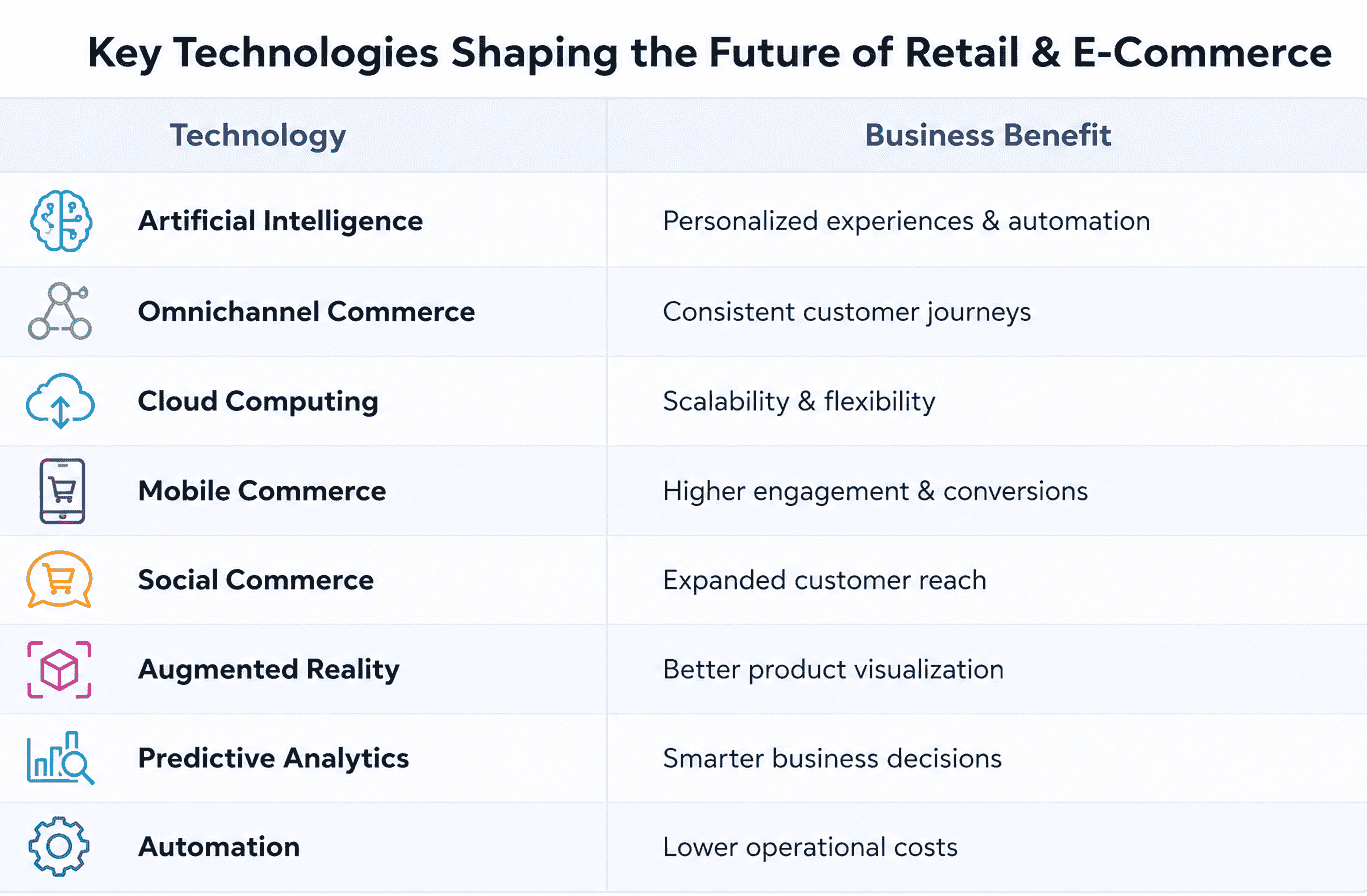
Retail technology trends are transforming how businesses attract customers, optimize operations, and drive long-term growth. In 2026, technologies such as artificial intelligence (AI), omnichannel commerce, cloud platforms, augmented reality (AR), social commerce, and predictive analytics will become essential for retailers looking to stay competitive.
According to Gartner, organizations that invest in digital commerce technologies consistently outperform competitors in customer satisfaction, operational efficiency, and revenue growth. — Gartner Digital Commerce Report, 2025
Let's explore the technologies that are shaping the next generation of retail.
How Is Artificial Intelligence Transforming Retail?
Artificial Intelligence (AI) enables retailers to automate operations, personalize customer experiences, forecast demand, and make data-driven business decisions. Rather than replacing human employees, AI helps businesses improve efficiency while delivering better customer service.
According to McKinsey & Company, AI can reduce supply chain forecasting errors by 30–50% while lowering inventory costs by 20–30%. — McKinsey Global Institute, 2024
Modern retailers use AI for:
• Personalized product recommendations
• Intelligent search
• Dynamic pricing
• Inventory forecasting
• Customer service chatbots
• Fraud detection
• Visual product search
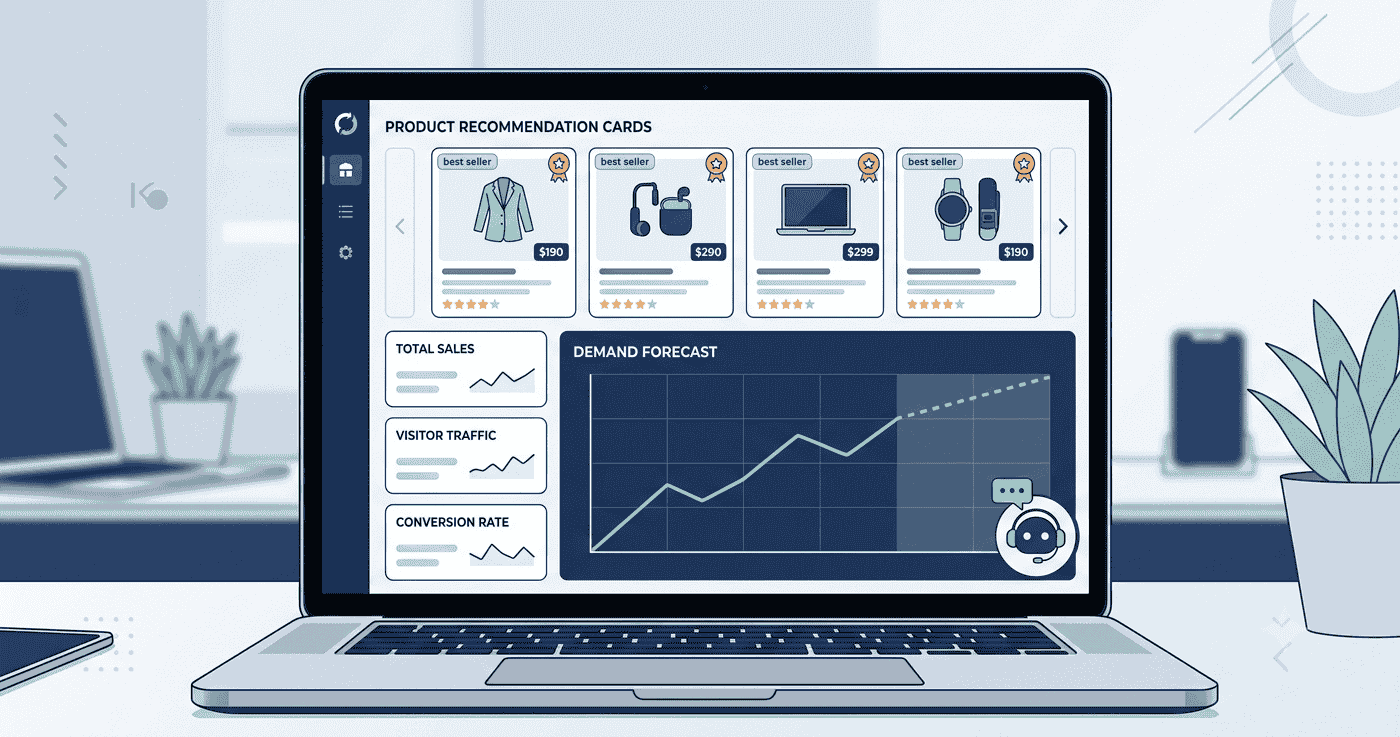
AI-Powered Product Recommendations
AI analyzes browsing history, purchase behavior, and customer preferences to recommend products that are most likely to convert into sales.
For example, Amazon's recommendation engine uses machine learning to personalize shopping experiences for millions of customers worldwide, making recommendations based on browsing history, purchase patterns, and customer behavior. - Amazon Science & Amazon Recommendation System.
AI Inventory Forecasting
AI predicts future demand using historical sales data, seasonal trends, weather conditions, and purchasing behavior.
For example, Walmart uses AI-powered demand forecasting to optimize inventory across thousands of stores, reducing stock shortages while minimizing excess inventory. Walmart Global Tech.
Businesses implementing AI inventory management often experience:
• Lower carrying costs
• Better stock availability
• Faster replenishment
• Improved customer satisfaction
If your organization is exploring intelligent retail solutions, BrillianTech's AI Platforms help integrate machine learning, predictive analytics, and automation into modern retail ecosystems.
Why Is Omnichannel Commerce Becoming Essential?
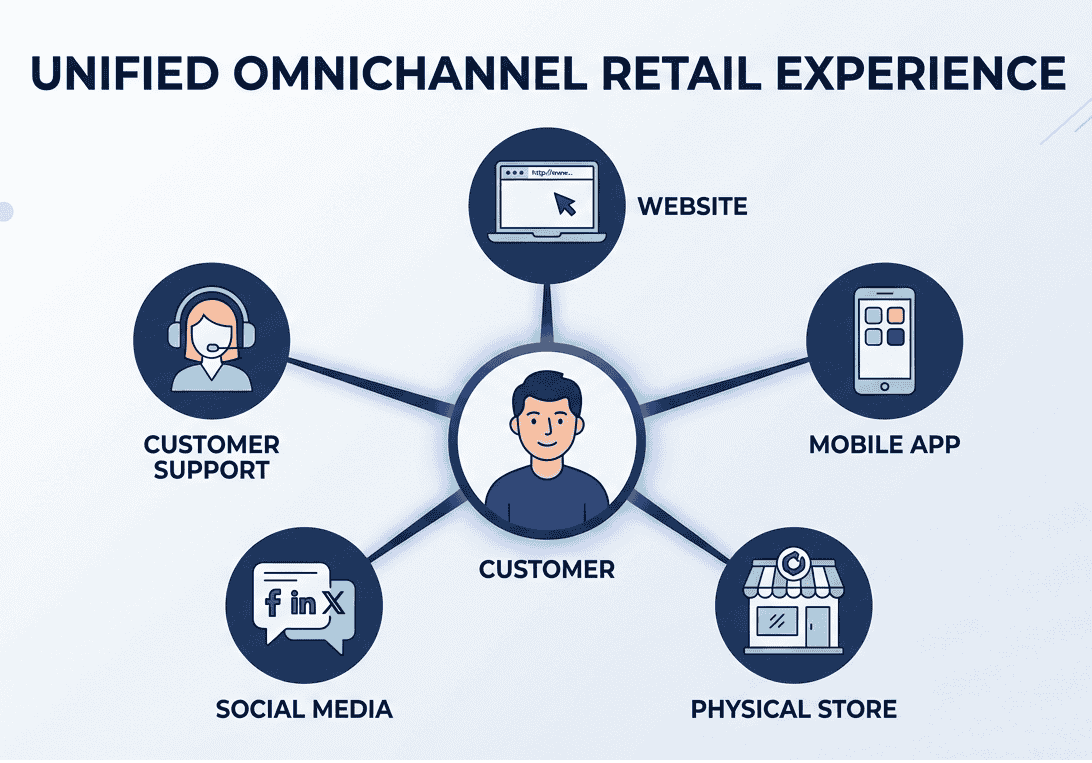
Omnichannel commerce connects every customer touchpoint into one unified shopping experience. Instead of treating online stores, physical outlets, mobile applications, and marketplaces separately, retailers manage them through a connected digital ecosystem.
According to Harvard Business Review, omnichannel customers spend more and demonstrate significantly higher loyalty than customers using only one shopping channel. — Harvard Business Review
Modern omnichannel retail includes:
• Websites
• Mobile applications
• Physical stores
• Social media stores
• Marketplaces
• Customer support
• Loyalty programs
Benefits of Omnichannel Retail
Businesses adopting omnichannel commerce can:
• Improve customer satisfaction
• Increase repeat purchases
• Reduce cart abandonment
• Maintain consistent pricing
• Synchronize inventory
• Improve customer loyalty
For example, Nike connects its mobile apps, digital membership program, retail stores, and online shopping platform to create a unified customer journey. Members can browse products online, receive personalized recommendations, access exclusive offers, and enjoy services such as receipt-free in-store returns and member benefits across Nike's digital and physical channels.
How Does Cloud Technology Improve Retail Operations?
Cloud technology enables retailers to scale their operations while reducing infrastructure costs and improving system reliability. Cloud-native platforms provide flexibility, security, and real-time access to business data from anywhere.
Instead of maintaining expensive on-premise infrastructure, retailers increasingly rely on cloud platforms for:
• Inventory management
• Customer relationship management
• Analytics
• Payment processing
• E-commerce platforms
• Data storage
According to Flexera's State of the Cloud Report, more than 89% of enterprises now use multi-cloud strategies to improve scalability and resilience. — Flexera, 2025
Cloud-based retail platforms provide:
• Faster scalability
• Automatic updates
• Higher availability
• Improved disaster recovery
• Better security
• Lower maintenance costs
To build scalable cloud-native retail platforms, explore BrillianTech's Custom Software Development Services, designed to support modern e-commerce applications, system integrations, and enterprise-grade digital transformation.
Why Is Mobile Commerce Growing Faster Than Traditional E-Commerce?
Mobile commerce has become one of the fastest-growing retail channels because consumers increasingly shop through smartphones rather than desktop computers.
According to Statista, mobile commerce contributes over 60% of global e-commerce sales, and its share continues to increase each year. — Statista Mobile Commerce Report
Today's consumers use smartphones to:
• Browse products
• Compare prices
• Complete purchases
• Track deliveries
• Read reviews
• Contact customer support
For example, Starbucks combines mobile ordering, digital payments, rewards, and personalized promotions into a single mobile application, creating one of the world's most successful retail loyalty ecosystems.
Businesses investing in mobile commerce benefit from:
• Higher customer engagement
• Better conversion rates
• Increased customer retention
• More personalized shopping experiences
If you're planning a retail mobile application, BrillianTech's Mobile Development Services help businesses build secure, scalable Android and iOS applications.
How Are Social Commerce and Voice Commerce Changing Online Shopping?
Social commerce and voice commerce are creating new purchasing channels that allow customers to shop without visiting traditional e-commerce websites.
Consumers increasingly discover products through:
• Instagram Shops
• Facebook Marketplace
• TikTok Shop
• Pinterest Shopping
• YouTube Shopping
Similarly, voice assistants enable customers to search for products, reorder items, and receive shopping recommendations using natural language.
These technologies reduce friction throughout the purchasing journey and improve customer convenience.
Businesses that embrace social commerce reach customers where they already spend their time instead of relying solely on websites.
Why Are Augmented Reality (AR) Experiences Becoming Popular?
Augmented Reality (AR) enhances online shopping by allowing customers to visualize products before purchasing. This reduces uncertainty, increases buyer confidence, and lowers return rates.
Retailers increasingly use AR for:
• Virtual furniture placement
• Fashion try-ons
• Cosmetic previews
• Eyewear fitting
• Home decoration planning
For example, IKEA Place enables customers to visualize furniture inside their homes using augmented reality before making a purchase. - IKEA Place.
This technology improves customer confidence while reducing costly product returns.
Retail Technology Trends at a Glance
How Does BrillianTech Help Retail & E-Commerce Businesses Modernize Their Operations?
BrillianTech helps retail and e-commerce businesses modernize their operations by developing custom software solutions, AI-powered applications, cloud-based platforms, mobile apps, and intelligent automation systems that improve customer experiences and operational efficiency. Instead of offering one-size-fits-all products, BrillianTech builds technology solutions tailored to each business's goals, workflows, and growth plans.
Whether you're a startup launching your first online store or an established retailer modernizing legacy systems, BrillianTech combines technical expertise with industry knowledge to help businesses accelerate digital transformation while minimizing implementation risks.
According to IDC, organizations that prioritize digital transformation consistently achieve faster revenue growth and stronger operational resilience than those relying on legacy systems. — IDC Future Enterprise Report, 2025
End-to-End Retail & E-Commerce Solutions
Modern retail businesses require integrated technology solutions that connect customers, operations, inventory, payments, and analytics into one seamless ecosystem. BrillianTech provides end-to-end retail software development services that support every stage of the digital commerce journey.
These solutions include:
• Custom Retail Software Development
• E-Commerce Platform Development
• Mobile Commerce Applications
• AI & Machine Learning Solutions
• Cloud-Based Retail Platforms
• ERP & CRM Integration
• Inventory Management Systems
• Point-of-Sale (POS) Solutions
• Customer Experience Platforms
• Quality Assurance Testing
• Dedicated Development Teams
Rather than replacing existing systems, BrillianTech helps businesses integrate and modernize them to create scalable digital ecosystems.
Learn how BrillianTech's Custom Software Development Services help retailers build integrated, cloud-ready platforms that streamline operations and enhance customer experiences.
How Does Retail Automation Improve Business Performance?
Retail automation reduces manual work, improves operational efficiency, and enables businesses to deliver faster and more consistent customer experiences. By automating repetitive processes, retailers can focus more on customer engagement and business growth.
Automation can streamline:
• Order processing
• Inventory updates
• Pricing adjustments
• Promotions
• Returns management
• Warehouse workflows
• Customer notifications
For example, global retailers increasingly use automated inventory synchronization to ensure product availability remains consistent across online stores, marketplaces, and physical retail locations.
Businesses adopting automation often experience:
• Lower operating costs
• Faster order fulfillment
• Fewer manual errors
• Better inventory accuracy
• Higher customer satisfaction
AI-Powered Inventory & Demand Forecasting
AI-powered inventory management uses predictive analytics and machine learning to forecast product demand, optimize stock levels, and improve supply chain efficiency. This enables retailers to reduce excess inventory while minimizing stock shortages.
According to McKinsey & Company, AI-driven supply chain planning can reduce forecasting errors by up to 50% while lowering inventory costs by 20–30%. — McKinsey Global Institute
Modern AI inventory systems analyze:
• Historical sales
• Seasonal demand
• Market trends
• Promotional campaigns
• Customer purchasing behavior
• Supplier lead times
For example, Walmart uses artificial intelligence and machine learning to improve demand forecasting and inventory management across its global retail network. By analyzing sales patterns, local events, weather conditions, and seasonal trends, Walmart can replenish inventory more accurately, helping improve product availability while reducing excess stock. - Walmart Global Tech – AI & Machine Learning; NVIDIA Customer Stories
BrillianTech develops intelligent inventory management solutions that provide retailers with real-time visibility into inventory levels across warehouses, stores, and digital channels.If you're planning to modernize inventory operations with artificial intelligence, explore BrillianTech's AI Platform Services to build scalable predictive analytics and machine learning solutions for retail.
How Does Data Analytics Improve Retail Decision-Making?
Retail analytics transforms business data into actionable insights that improve sales, marketing, inventory planning, and customer engagement. Rather than relying on intuition, retailers can make informed decisions based on real-time performance metrics.
Modern analytics dashboards provide insights into:
• Customer purchasing behavior
• Product performance
• Sales trends
• Marketing ROI
• Regional demand
• Inventory turnover
• Customer lifetime value
For example, Tesco uses advanced analytics and Clubcard loyalty data to understand customer purchasing behavior, optimize product assortments, and deliver personalized promotions. These insights help Tesco improve inventory planning, pricing strategies, and marketing effectiveness while enhancing the overall customer experience. - Tesco PLC Annual Report; dunnhumby Customer Stories
How Does BrillianTech Build Personalized Customer Experiences?
Personalized customer experiences increase engagement, improve conversion rates, and strengthen long-term customer loyalty. BrillianTech develops intelligent customer experience platforms that use data and AI to personalize every stage of the shopping journey.
These solutions include:
• AI product recommendations
• Personalized promotions
• Loyalty programs
• Customer segmentation
• Marketing automation
• Customer behavior analytics
• Omnichannel engagement
For example, Sephora uses AI-powered recommendation engines and customer data to personalize product suggestions across its website and mobile app. By analyzing browsing behavior, purchase history, and beauty preferences, Sephora delivers tailored recommendations that improve customer engagement and encourage repeat purchases. - Salesforce Customer Stories – Sephora; Sephora Digital Innovation
Businesses investing in personalization consistently achieve higher customer retention because customers receive more relevant shopping experiences.
Why Are Security and Compliance Essential for Digital Commerce?
Security and regulatory compliance protect customer data, build trust, and reduce business risks associated with digital commerce. As retailers process increasing volumes of online transactions, maintaining secure systems becomes a critical business priority.
BrillianTech develops secure retail applications with features such as:
• Secure payment processing
• PCI DSS-ready payment integrations
• GDPR-aware data handling
• Role-based access control
• Data encryption
• Secure cloud deployment
• Authentication and authorization
• Continuous security testing
According to IBM's Cost of a Data Breach Report, organizations with mature security practices significantly reduce both the financial impact and recovery time associated with cyber incidents. — IBM Security, 2025
Security isn't simply about compliance—it's about protecting customer trust and long-term business reputation.
To ensure secure, reliable, and high-performing retail applications, explore BrillianTech's Quality Assurance Services, which help identify vulnerabilities, validate functionality, and maintain compliance throughout the software development lifecycle.
How Can Cloud Solutions Help Retail Businesses Scale?
Cloud-native retail platforms enable businesses to scale rapidly without major infrastructure investments. As sales volumes grow, cloud-based systems automatically adapt to changing workloads while maintaining performance and availability.
Cloud platforms provide:
• Automatic scalability
• High availability
• Secure data storage
• Disaster recovery
• Faster software deployment
• Reduced maintenance costs
Discover how BrillianTech's Cloud Application Development Services help retailers build cloud-native applications that deliver high availability, secure data management, and seamless scalability for growing digital commerce businesses
Why Is Staff Augmentation Valuable for Retail Technology Projects?
Staff augmentation enables retailers to expand their development capabilities without the delays and costs of traditional hiring. Businesses can quickly access experienced developers, QA engineers, AI specialists, and cloud experts whenever project requirements increase.
BrillianTech's dedicated development teams help organizations:
• Accelerate software delivery
• Fill technical skill gaps
• Reduce recruitment time
• Scale projects efficiently
• Maintain development quality
Whether building a new e-commerce platform or modernizing an existing retail system, staff augmentation provides the flexibility needed to deliver projects faster.
BrillianTech's Staff Augmentation Services enable retailers to rapidly scale development teams with skilled technology professionals who seamlessly integrate into existing projects and accelerate software delivery.
Business Benefits of Partnering with BrillianTech
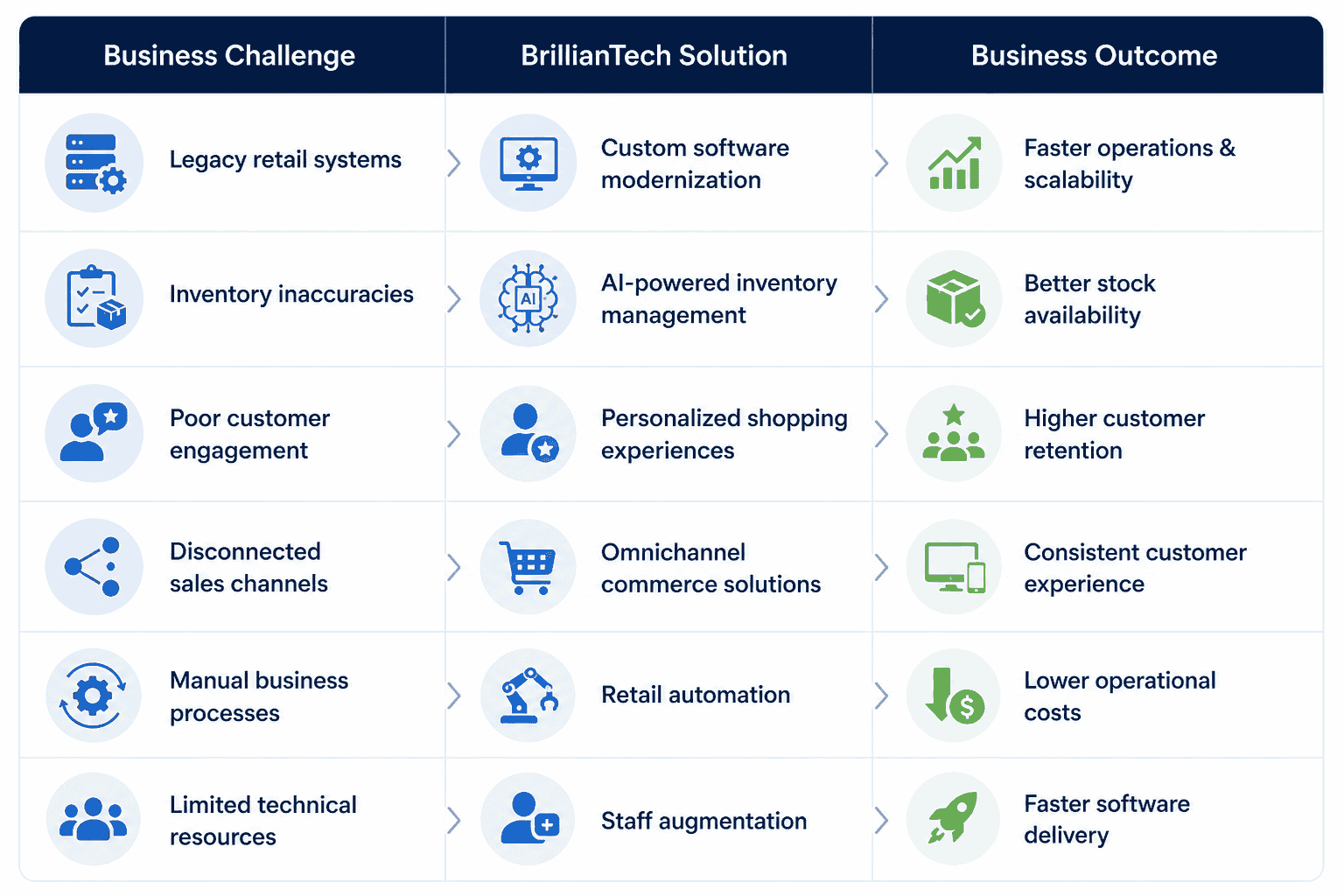
Retail Success Stories: Real-World Examples of Digital Transformation
Successful retailers use modern technologies to improve customer experiences, optimize operations, and achieve sustainable business growth. While every organization's transformation journey is unique, leading global brands demonstrate how technology creates measurable business value.
Walmart: AI-Powered Inventory Optimization
Walmart uses artificial intelligence and predictive analytics to improve inventory forecasting, reduce stock shortages, and optimize supply chain operations across thousands of stores. By analyzing historical sales, seasonal demand, and purchasing behavior, Walmart improves product availability while minimizing excess inventory. - Walmart Global Tech
IKEA: Augmented Reality Shopping
IKEA introduced the IKEA Place application, allowing customers to visualize furniture in their homes using augmented reality before purchasing. This enhances buying confidence, improves customer experience, and reduces product returns. -IKEA Place
Nike: Omnichannel Customer Experience
Nike integrates its website, mobile applications, retail stores, and membership ecosystem into one connected customer experience. Customers can browse products online, reserve items, make purchases, and access loyalty rewards seamlessly across multiple channels. - Nike Digital Strategy
Amazon: AI-Powered Personalization
Amazon's recommendation engine uses machine learning to personalize product recommendations based on customer behavior, browsing history, and purchasing patterns. Personalized recommendations contribute significantly to customer engagement and increased sales. -Greeksforgreek
How Can Retail Businesses Prepare for the Future?
Retail businesses can prepare for the future by adopting a structured digital transformation strategy that prioritizes customer experience, operational efficiency, and scalable technology. Rather than implementing every new trend at once, organizations should focus on technologies that solve their most important business challenges.
Step 1: Evaluate Your Existing Technology
Begin by assessing your current systems, including your e-commerce platform, inventory management software, customer relationship management (CRM) tools, ERP systems, and payment infrastructure. Identify gaps that create inefficiencies or limit growth.
Step 2: Understand Customer Expectations
Analyze how customers interact with your brand across every touchpoint.
Ask questions such as:
• Are customers receiving personalized recommendations?
• Is the checkout process frictionless?
• Can customers switch seamlessly between online and offline channels?
• Are mobile experiences optimized?
Customer feedback and analytics provide valuable insights into improvement opportunities.
Step 3: Prioritize High-Impact Improvements
Not every modernization initiative needs to happen simultaneously.
Start with projects that deliver measurable business value, such as:
• AI-powered recommendations
• Inventory optimization
• Mobile commerce applications
• Customer analytics dashboards
• Omnichannel integration
• Retail automation
Prioritizing these initiatives allows businesses to achieve faster ROI while minimizing implementation risks.
Step 4: Modernize Legacy Systems
Legacy software often limits scalability, integration, and customer experience.
Modern cloud-based architectures enable businesses to:
• Integrate existing systems
• Improve performance
• Enhance security
• Reduce maintenance costs
• Support future growth
BrillianTech specializes in modernizing legacy retail applications while minimizing disruption to daily business operations. If you're planning to modernize legacy retail systems with intelligent automation and AI-driven capabilities, explore BrillianTech's AI Solutions to transform traditional applications into scalable, future-ready digital platforms.
Step 5: Partner with the Right Technology Team
Digital transformation is not only about choosing technologies—it is also about choosing the right implementation partner.
A trusted technology partner should provide:
• Business consulting
• Solution architecture
• UI/UX design
• Custom software development
• AI integration
• Quality assurance
• Ongoing maintenance and support
BrillianTech combines technical expertise with industry knowledge to help retailers build scalable, future-ready digital commerce solutions.
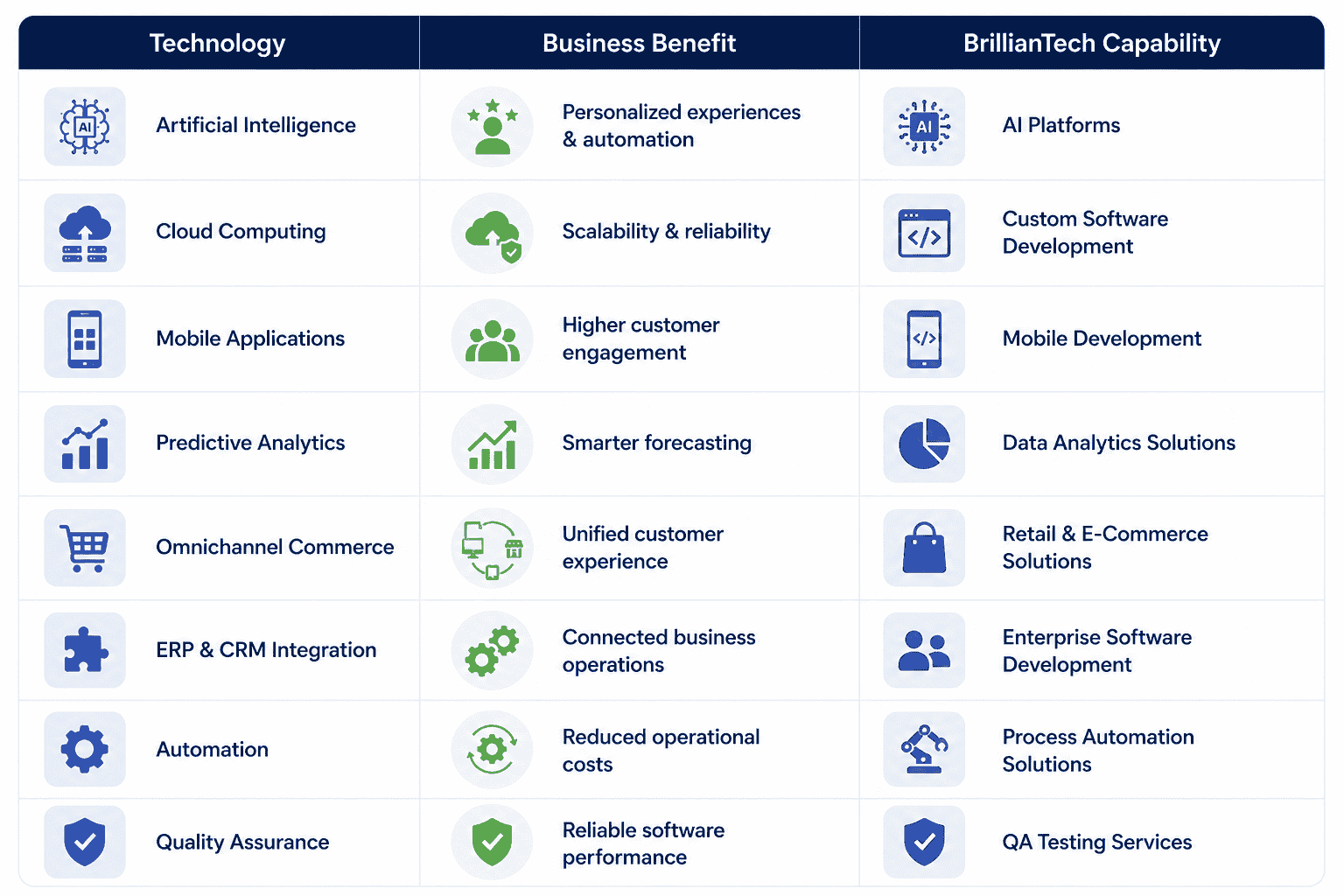
Essential Technologies Powering Modern Retail
Conclusion
The future of retail belongs to businesses that embrace innovation, prioritize customer experience, and invest in scalable digital technologies. Artificial intelligence, automation, cloud computing, mobile commerce, and omnichannel experiences are no longer optional—they are becoming the foundation of modern retail success.
Retailers that modernize today are better positioned to adapt to changing consumer expectations, optimize operations, and unlock sustainable growth in the years ahead.
Whether you're building a new e-commerce platform, modernizing legacy retail systems, implementing AI-powered automation, or creating a seamless omnichannel experience, BrillianTech provides the expertise and technology needed to transform your vision into reality.
If you're ready to future-proof your retail business, explore our Custom Software Development Services, Mobile Development Services, and AI Platforms, or Contact Our Software Experts to discuss your digital transformation goals.